
Battle Rope Exercises for Explosive Power Development
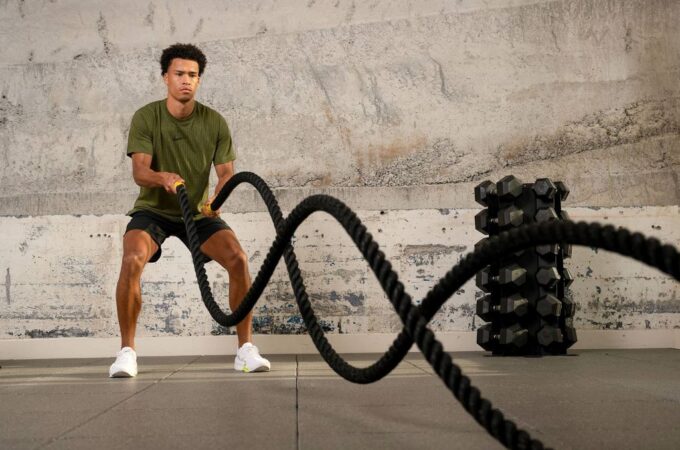
Battle ropes have become essential training tools for athletes seeking explosive power. These heavy ropes build strength, endurance, and raw athletic power through dynamic movements. This guide explores the most effective battle rope exercises for developing explosive capabilities that translate to sports performance and everyday activities.
Understanding Explosive Power and Battle Ropes
Explosive power combines strength and speed to generate maximum force quickly. Athletes in sports like basketball, football, and martial arts rely heavily on this ability. Battle ropes train your body to produce powerful, rapid movements repeatedly.
Unlike traditional weights, battle ropes create constant tension throughout each movement. Your muscles must work continuously to control the rope’s motion. Additionally, the unstable nature of the ropes engages stabilizer muscles that fixed equipment cannot target.
Research shows that high-intensity interval training with battle ropes significantly improves power output. According to Harvard Health, combining dynamic movements with proper recovery enhances athletic performance. Battle ropes fit perfectly into this training philosophy.
Benefits of Battle Rope Training for Power
Battle rope exercises offer unique advantages for explosive power development. First, they engage your entire body simultaneously. Every wave you create travels from your legs through your core to your arms.
Furthermore, battle ropes improve your anaerobic capacity. These short, intense bursts mirror the energy demands of explosive movements in sports. Your body learns to generate power repeatedly without fatigue.
The cardiovascular benefits also support power development. A strong heart delivers oxygen more efficiently to working muscles. Therefore, you can maintain explosive efforts longer during competition or training.
Battle ropes also reduce injury risk compared to high-impact plyometric exercises. The ropes absorb shock while still providing intense resistance. This makes them suitable for athletes recovering from injuries or those seeking lower-impact power training.
Choosing the Right Battle Rope
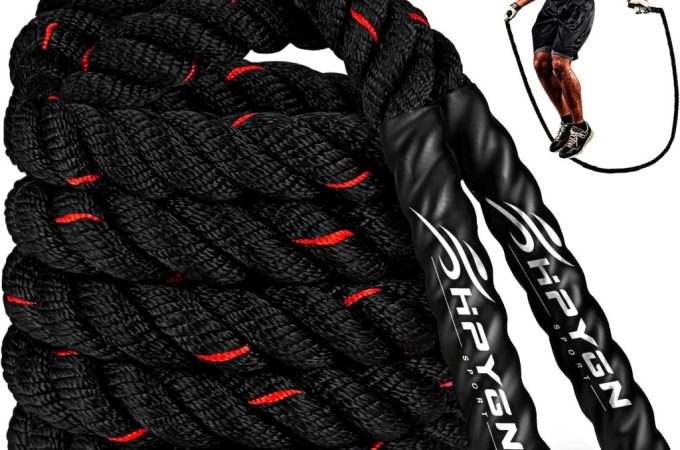
Selecting appropriate equipment ensures effective training. Battle ropes typically come in 30, 40, or 50-foot lengths. Beginners should start with shorter, lighter ropes before progressing.
Rope diameter affects difficulty significantly. Common sizes range from 1.5 to 2 inches in diameter. Thicker ropes require more grip strength and generate greater resistance. However, starting with 1.5-inch ropes allows you to master technique first.
Material quality matters for durability and performance. Look for ropes made from poly dacron or manila. These materials withstand outdoor conditions and heavy use. Additionally, check for reinforced ends that prevent fraying.
Your training space determines rope length. A 30-foot rope needs at least 15 feet of space when anchored. Measure your available area before purchasing to ensure proper fit.
Essential Setup and Safety Guidelines
Proper setup maximizes effectiveness and prevents injury. Anchor your rope securely to an immovable object. Suitable anchor points include heavy kettlebells, poles, or specialized battle rope anchors.
Test the anchor before beginning exercises. Pull hard on both rope ends to ensure stability. An unstable anchor creates dangerous situations during explosive movements.
Maintain adequate space around your training area. Battle ropes swing wide during many exercises. Clear at least five feet on all sides to prevent hitting objects or people.
Wear appropriate footwear with good traction. Explosive movements require stable footing to generate maximum power. Additionally, consider using training gloves if grip strength limits your performance.
Proper Stance and Core Engagement
Your foundation determines power output in battle rope exercises. Start with feet shoulder-width apart and knees slightly bent. This athletic stance allows for explosive hip drive.
Engage your core muscles before initiating any movement. Think about bracing your midsection as if preparing for a punch. This core tension transfers power from your lower body through your arms.
Keep your chest up and shoulders back throughout exercises. Slouching reduces power output and increases injury risk. Furthermore, proper posture ensures efficient energy transfer through your kinetic chain.
Distribute your weight evenly across both feet. Avoid leaning back or forward excessively. Balance enables you to generate force from a stable platform.
Double Wave Slams for Maximum Power
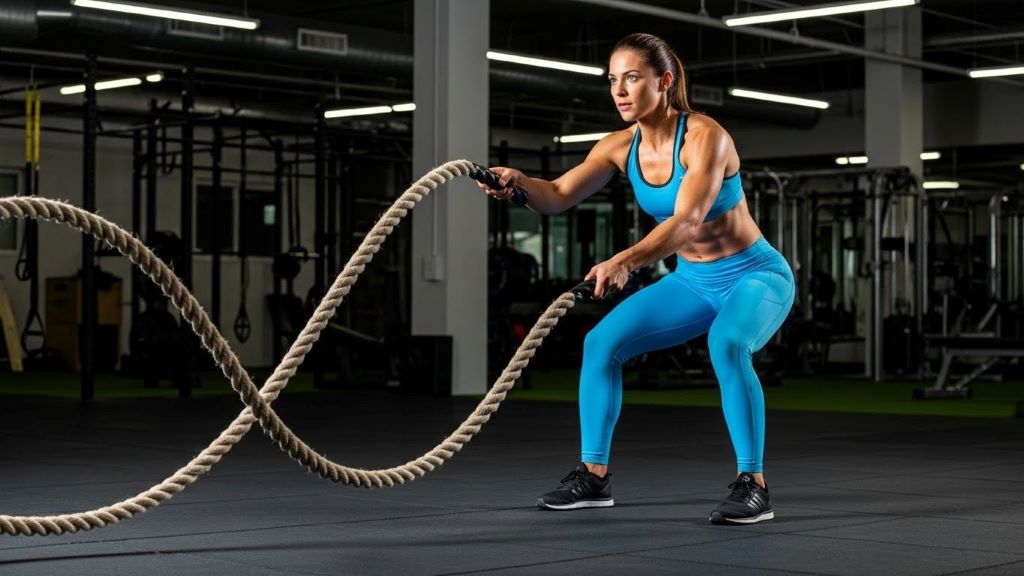
Double wave slams develop explosive upper body power effectively. Grip both rope ends with hands about hip-width apart. Simultaneously raise both arms overhead explosively.
Slam the ropes down forcefully using your entire body. Drive through your legs and engage your core as you throw the ropes downward. The movement should feel like throwing something with maximum force.
Reset quickly and repeat for 20 to 30 seconds. Focus on speed and power rather than endurance initially. Rest for 30 to 60 seconds between sets.
Perform four to six sets during training sessions. This exercise pattern builds the fast-twitch muscle fibers essential for explosive power. Moreover, the repeated explosive contractions improve your rate of force development.
Alternating Waves for Power Endurance
Alternating waves combine power with sustained effort. Hold one rope end in each hand. Rapidly alternate raising and lowering each arm to create continuous waves.
Generate waves from your core and hips rather than just your arms. Each wave should result from a slight rotational movement through your torso. This technique prevents arm fatigue and maximizes power output.
Maintain consistent wave height throughout the exercise. As fatigue sets in, focus on explosive hip drive to maintain intensity. Additionally, keep your breathing rhythmic to sustain effort.
Work for 30 to 45 seconds at maximum intensity. Rest for equal time between rounds. Complete five to eight rounds for optimal power endurance development.
Power Slams with Squat Integration
Integrating squats with rope slams builds lower body explosive power. Start in your athletic stance holding both rope ends. Drop into a full squat while lowering the ropes.
Explode upward from the squat while simultaneously slamming the ropes overhead. The movement should be one fluid, explosive action. Drive powerfully through your heels as you rise.
This exercise mimics explosive movements in many sports. Basketball players benefit from the vertical power component. Similarly, football players develop the explosive hip drive needed for blocking and tackling.
Perform eight to twelve explosive repetitions per set. Rest completely between sets to maintain power output. Complete four to six sets during power-focused training sessions.
Side-to-Side Waves for Rotational Power
Rotational power drives performance in many athletic movements. Side-to-side waves specifically target this quality. Hold both rope ends and create waves by moving the ropes laterally.
Rotate through your hips and core to generate each wave. Your arms guide the movement but your torso provides the power. Keep your feet planted and maintain your athletic stance.
This exercise develops the rotational explosiveness needed for throwing, swinging, and striking movements. Tennis players, golfers, and baseball players particularly benefit from this exercise pattern.
Continue for 20 to 30 seconds per set. Focus on explosive rotational speed rather than large amplitude. Rest adequately between sets to maintain quality movement.
Jump Slam Combinations
Jump slams add a plyometric component to battle rope training. Begin in your athletic stance holding both ropes. Perform a vertical jump while simultaneously raising the ropes overhead.
Land softly and immediately slam the ropes downward with maximum force. The landing and slam should flow together smoothly. Reset quickly and repeat the sequence.
This advanced exercise requires good coordination and conditioning. Therefore, master basic slams and jumps separately before combining them. Additionally, ensure your landing surface provides adequate shock absorption.
Perform six to ten repetitions per set with complete recovery between sets. This exercise maximally challenges your explosive power across multiple movement planes. According to Men’s Health, combined movements like these produce superior athletic adaptations.
Programming Battle Ropes for Power Development
Effective programming maximizes your explosive power gains. Train with battle ropes two to three times weekly. Allow at least 48 hours between sessions for adequate recovery.
Structure your sessions around quality rather than quantity. Perform four to eight exercises per session with multiple sets each. Rest periods should allow near-complete recovery between efforts.
Begin sessions with explosive exercises when you are fresh. Double wave slams and jump slams demand maximum neural drive. Fatigue significantly reduces power output in these movements.
Periodize your training to prevent plateaus. Spend three to four weeks emphasizing maximum power with longer rest periods. Then, transition to power endurance with shorter rest intervals.
Measuring Progress and Intensity
Track your development to ensure continued improvement. Count waves or slams completed in specific time periods. Increasing your output indicates improving power and conditioning.
Monitor your perceived exertion during sets. True power development requires maximum effort. If exercises feel easy, increase rope thickness or reduce rest periods.
Video analysis helps identify technique breakdowns. Watch for proper hip drive, core engagement, and explosive initiation. Maintaining quality movement under fatigue demonstrates improved power endurance.
Consider heart rate monitoring during sessions. Power training should elevate heart rate significantly. Recovery heart rate between sets also indicates improving conditioning.
Common Mistakes to Avoid
Several errors limit power development with battle ropes. Using only arm strength rather than full-body power ranks as the most common mistake. Remember that explosive power originates from your legs and core.
Insufficient rest between sets prevents maximum power output. Power training requires quality over quantity. Taking inadequate rest turns power training into conditioning work.
Poor posture reduces effectiveness and increases injury risk. Maintain proper alignment throughout exercises. Additionally, avoid excessive forward lean that strains your lower back.
Progressing too quickly leads to overtraining and injury. Master fundamental movements before attempting advanced variations. Furthermore, gradually increase intensity rather than making dramatic jumps.
Integrating Battle Ropes with Other Training
Battle ropes complement traditional strength training effectively. Perform them after main strength work when developing power. Your nervous system remains fresh while your muscles are warmed up.
Combine battle ropes with other explosive exercises for comprehensive development. Pair them with box jumps, medicine ball throws, or Olympic lifting variations. This variety prevents adaptation and maintains training stimulus.
Use battle ropes as active recovery on lighter training days. Lower intensity rope work promotes blood flow without excessive fatigue. However, ensure this work remains truly light to support recovery.
Consider battle ropes as finishers to strength sessions. Brief, intense rope work creates metabolic stress while reinforcing explosive movement patterns. Keep these sessions under five minutes total work time.
Nutrition and Recovery for Power Development
Proper nutrition supports explosive power gains. Consume adequate protein to repair and build muscle tissue. Aim for 0.7 to 1 gram per pound of body weight daily.
Carbohydrates fuel explosive efforts and replenish energy stores. Time carbohydrate intake around training sessions for optimal performance and recovery. Additionally, stay well hydrated before, during, and after training.
Prioritize sleep for neural recovery and adaptation. Explosive power training taxes your nervous system significantly. Aim for seven to nine hours of quality sleep nightly.
Consider active recovery methods between training sessions. Light movement, stretching, and foam rolling promote circulation and reduce soreness. These practices help you maintain training consistency.
Conclusion
Battle rope exercises provide exceptional tools for developing explosive power. Through movements like double wave slams, alternating waves, and jump slam combinations, you can build the rapid force production essential for athletic performance. The key lies in maintaining proper technique, ensuring adequate recovery, and progressively challenging yourself over time. By integrating these exercises into a well-structured program with proper nutrition and recovery, you will develop the explosive capabilities that elevate your athletic performance. Start with fundamental movements, master the technique, and gradually increase intensity to unlock your explosive potential.
Frequently Asked Questions
How often should I train with battle ropes for explosive power?
Train with battle ropes two to three times per week for explosive power development. Allow at least 48 hours between sessions for adequate nervous system and muscle recovery. Excessive frequency prevents the quality repetitions necessary for power gains.
What rope length and thickness is best for beginners?
Beginners should start with a 30 to 40-foot rope with 1.5-inch diameter. This combination allows you to master technique without excessive difficulty. Progress to thicker or longer ropes after developing proper form and foundational strength.
Can battle ropes replace traditional weight training for power?
Battle ropes complement but do not fully replace traditional weight training. They excel at developing power endurance and movement-specific power. However, heavy strength training remains essential for building the foundational strength that supports explosive power.
How long should I rest between battle rope power sets?
Rest for 30 to 90 seconds between power-focused battle rope sets. Longer rest allows fuller recovery and maintains maximum power output. Shorter rest develops power endurance but reduces peak power production during each set.
Are battle ropes safe for people with shoulder problems?
People with shoulder issues should consult healthcare providers before starting battle rope training. Modified exercises with controlled movements may be appropriate for some conditions. However, explosive overhead movements may aggravate certain shoulder problems and require clearance first.
Related Topics:
Top 7 Mistakes to Avoid When Using Exercise Ropes
Battle Rope Workouts: Burn Fat and Build Strength Fast