How to Use a Tricep Rope for Advanced Hypertrophy Training
If you want bigger, stronger arms, the tricep rope is one of the best tools you can use. It is simple, affordable, and incredibly effective. However, many people use it without getting the most out of it. This guide will show you exactly how to use a tricep rope for advanced hypertrophy training. You will learn the techniques, programming tips, and science behind why this attachment works so well.
What Is a Tricep Rope and Why Does It Matter?
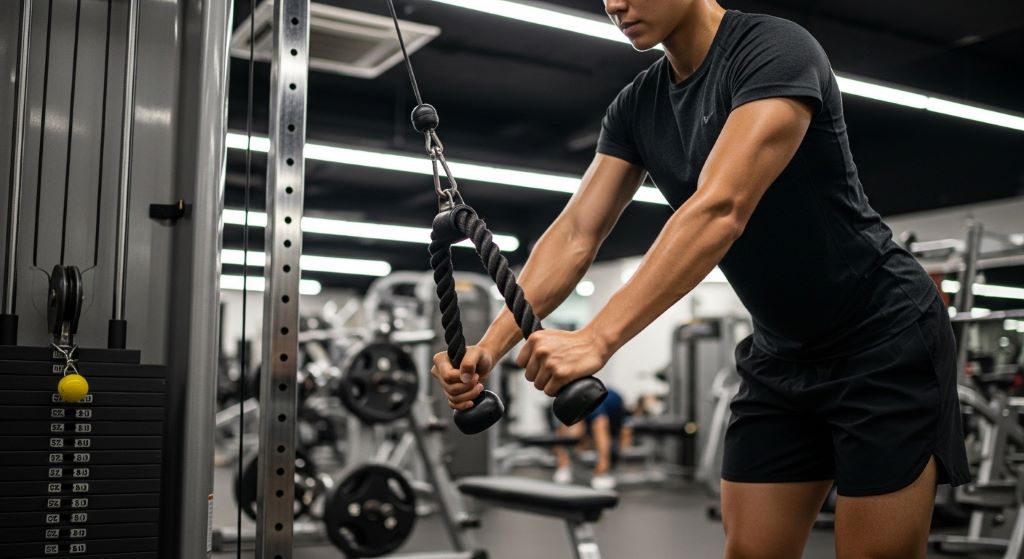
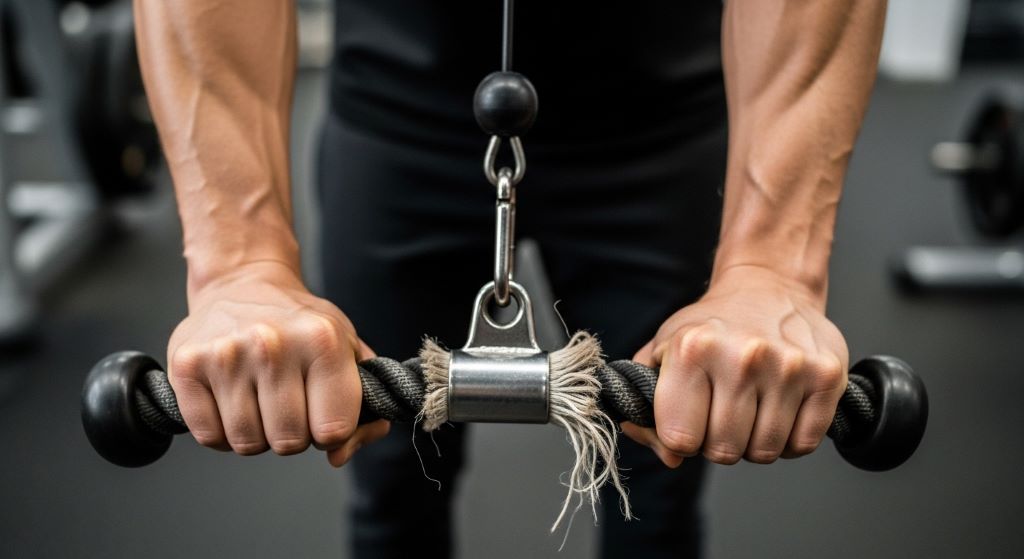
A tricep rope is a cable attachment made of thick, braided nylon or rubber. It has two separate ends, often with rubber knobs to grip. You attach it to a high cable pulley and use it to perform pushdown exercises.
The rope matters because it allows your wrists to rotate freely. This is something a straight bar does not allow. That freedom of movement lets you fully extend and supinate at the bottom of the rep. Therefore, you get a stronger contraction in the lateral and medial heads of the tricep. More contraction means more muscle fiber activation. More fiber activation leads to greater hypertrophy over time.
Additionally, the rope reduces strain on the wrists and elbows. This makes it a safer option for lifters who train with heavy volume. If you have joint issues, the rope is often a better choice than the bar.
Understanding the Tricep Muscle for Better Results
Before you start, it helps to understand what you are training. The tricep has three heads: the long head, the lateral head, and the medial head. Together, they make up about two-thirds of your upper arm mass. Therefore, if your goal is bigger arms, training your triceps effectively is more important than training your biceps.
The long head originates at the scapula and crosses the shoulder joint. It responds best to exercises that place it under stretch, such as overhead tricep extensions. The lateral head sits on the outer side of the arm. It is most visible when your arms are at your sides. The medial head lies beneath the other two and is heavily recruited during all tricep movements.
Pushdowns with a rope primarily target the lateral and medial heads. However, with minor adjustments to angle and position, you can also add more tension to the long head. Knowing this allows you to program smarter and hit all three heads effectively.
Setting Up the Cable Machine Correctly
Setup matters more than most people think. A poor setup will limit your range of motion and reduce muscle activation.
Start by attaching the rope to the highest pulley on the cable machine. Stand about one foot back from the stack. Your feet should be shoulder-width apart or slightly staggered for balance. Grip the rope with both hands, thumbs facing up. Keep your elbows tucked close to your torso throughout the movement.
The height of the pulley affects the angle of resistance. A higher pulley creates a longer range of motion and more stretch at the top. This is ideal for hypertrophy. However, if the pulley is too high and you are short in stature, you may lose control of the movement. Adjust accordingly.
Your starting position should have the rope near chest or chin height. Avoid letting the weight pull your elbows forward. Keeping the elbows pinned back ensures the triceps do all the work.
The Correct Pushdown Technique for Hypertrophy
Technique is everything when training for muscle growth. Sloppy reps lead to less activation and more injury risk. Follow these steps carefully.
Start with the rope at the top position. Your elbows should be bent at about 90 degrees. Brace your core and keep a slight forward lean at the hips. This lean helps stabilize your body as you push down.
Push the rope downward in a controlled manner. As you reach the bottom, flare your wrists outward. This is the key difference between using a rope and a bar. Flaring the wrists at the bottom forces a stronger contraction in the tricep. Hold that contracted position for one to two seconds.
Slowly return the rope to the starting position. Do not let the weight snap back up. Control the eccentric phase. The lowering portion of the rep causes more muscle damage. More muscle damage, when paired with proper recovery, leads to greater hypertrophy.
Aim for a tempo of two seconds down and two seconds up. This keeps constant tension on the muscle throughout the set.
Advanced Techniques to Maximize Hypertrophy
Once you have the basic movement down, you can apply advanced techniques to push further.
Drop Sets
Drop sets involve doing a set to failure, then immediately reducing the weight and continuing. For example, do 10 reps at 50kg, then drop to 35kg and do 8 more reps. This technique extends the set past the point of normal failure. Additionally, it floods the muscle with metabolic stress, which is a key driver of hypertrophy.
Slow Eccentrics
Slow eccentrics mean focusing on the lowering phase. Take three to five seconds to return the rope to the starting position. This increases time under tension significantly. Research supports that longer time under tension leads to greater muscle protein synthesis.
Isometric Holds
At the bottom of the pushdown, hold the contracted position for three seconds on every rep. This forces maximum activation of the lateral head. It is a simple addition, but it makes every set harder and more effective.
Superset With Overhead Extensions
Pair your rope pushdowns with overhead tricep extensions using the same rope attachment on a low pulley. This combination hits all three heads of the tricep in one superset. First, do the overhead extension to target the long head. Then, immediately do pushdowns to hit the lateral and medial heads. Your triceps will be completely fatigued by the end.
Programming the Tricep Rope Into Your Training
Knowing how to use the rope is one thing. Programming it correctly is another. For hypertrophy, the research suggests training each muscle group two to four times per week. You do not need to use the rope every session, but it should appear consistently.
A good starting point is three sets of 10 to 15 reps per session. As your strength improves, increase either the weight or the reps. When you can do 15 clean reps with good form, increase the weight slightly. This is known as progressive overload, and it is the number one driver of muscle growth.
You can also cycle between different rep ranges. One week, train heavy with six to eight reps. The next week, train lighter with 15 to 20 reps. This variation challenges the muscle in different ways and prevents plateaus.
Here is a sample weekly tricep plan using the rope:
- Day 1: Rope pushdowns – 4 sets of 10 reps, slow eccentric
- Day 3: Overhead rope extensions superset with rope pushdowns – 3 sets each
- Day 5: Drop set rope pushdowns – 3 sets with 2 drops each
This plan provides enough volume and variety to drive consistent hypertrophy. Rest at least 48 hours between sessions targeting the same muscle.
Common Mistakes to Avoid
Many lifters make the same errors when using a tricep rope. Avoiding these mistakes will help you get better results faster.
The most common mistake is using too much weight. Heavy weight forces you to swing your body and use momentum. This reduces tension on the tricep. Choose a weight where you can perform clean reps with a full range of motion.
Another mistake is not flaring the wrists at the bottom. If you do not flare your wrists, you are missing the primary advantage of using a rope over a bar. Always flare outward at peak contraction.
Letting the elbows drift forward is also a problem. When your elbows drift, the front deltoids and chest start to assist the movement. This reduces the load on your triceps. Keep your elbows pinned at your sides at all times.
Finally, rushing through reps is a mistake many people make. Fast reps reduce time under tension and limit hypertrophy. Slow down and feel every part of the movement.
Nutrition and Recovery to Support Tricep Growth
Training hard is only part of the equation. Without proper nutrition and recovery, your muscles will not grow. Therefore, pay close attention to what happens outside the gym.
Protein is the most important nutrient for muscle growth. Aim for 1.6 to 2.2 grams of protein per kilogram of body weight each day. Good sources include chicken, eggs, fish, Greek yogurt, and legumes. Spread your protein intake across three to five meals for optimal muscle protein synthesis.
Sleep is equally important. Most muscle repair happens during deep sleep. Aim for seven to nine hours per night. Inadequate sleep raises cortisol levels and reduces testosterone, both of which hurt muscle growth.
Additionally, manage stress. Chronic stress elevates cortisol, which breaks down muscle tissue. Regular rest days, light activity, and mindfulness practices can all help you manage stress levels.
Conclusion
The tricep rope is a powerful tool for advanced hypertrophy training. It provides a unique range of motion, promotes stronger muscle contractions, and is gentler on the joints than a straight bar. However, the results depend entirely on how you use it. Proper setup, clean technique, and smart programming are all essential.
Start with the basics and master your form. Then layer in advanced techniques like drop sets, slow eccentrics, and supersets. Program the rope two to three times per week with progressive overload in mind. Support your training with adequate protein, quality sleep, and stress management. If you do all of this consistently, you will see real, lasting tricep growth.
The tricep rope is not complicated. But using it well requires intention, focus, and patience. Apply what you have learned here, and your triceps will thank you for it.
Frequently Asked Questions
1. How often should I use a tricep rope for hypertrophy? Aim to train your triceps two to three times per week. This provides enough stimulus and allows adequate recovery between sessions. More frequency can work if your volume per session is lower.
2. Is the tricep rope better than a straight bar for pushdowns? The rope is generally better for hypertrophy because it allows wrist rotation at the bottom of the movement. This creates a stronger peak contraction. However, both attachments have their place, and alternating between them adds variety.
3. What weight should I use for rope pushdowns? Start with a weight that allows you to complete 10 to 12 clean reps with full range of motion and a controlled tempo. Once you can do 15 reps with ease, increase the weight by the smallest increment available.
4. Can beginners use the tricep rope? Yes, beginners can use the tricep rope. However, focus on learning the movement pattern first with lighter weights. Master the form before adding advanced techniques like drop sets or slow eccentrics.
5. Why do my elbows hurt when using the tricep rope? Elbow pain usually comes from using too much weight, letting the elbows drift forward, or not warming up properly. Reduce the weight, ensure your elbows stay pinned at your sides, and warm up with a few lighter sets before working up to your training weight. If pain persists, consult a physiotherapist.
Related Topics:
How Do You Use a Boxing Rope? Mastering the Hodag Rope for Peak Performance
Battle Rope Workouts: Burn Fat and Build Strength Fast