Prayer Rope Traditional Making Process
Prayer ropes have served as spiritual tools for centuries. These handcrafted items hold deep meaning in various religious traditions. The making process combines skill, patience, and devotion. Understanding how artisans create these sacred objects reveals the dedication behind each knot.
Understanding Prayer Ropes and Their Significance
A prayer rope is a loop of knots used during meditation and prayer. Monks and laypeople use them to count prayers or mantras. The practice originated in early Christian monasticism. Each knot represents a prayer, helping practitioners maintain focus during spiritual exercises.
Different cultures have adapted prayer ropes to their traditions. Eastern Orthodox Christians call them komboskini or chotki. Catholics use similar items called rosaries. However, the traditional knotted prayer rope has a distinct construction method that sets it apart from beaded alternatives.
The spiritual significance extends beyond simple counting. Many believers consider the rope itself a blessed object. The maker often prays throughout the creation process. This practice infuses each rope with spiritual intention and devotion.
Materials Required for Traditional Prayer Rope Making
Traditional prayer rope makers select materials carefully. The choice of material affects both durability and symbolism. Wool remains the most traditional option. It represents the sheep of Christ’s flock in Christian symbolism.
Black wool is the most common color choice. However, some makers use natural undyed wool or other colors. The darkness symbolizes mourning for sins and spiritual vigilance. Additionally, wool’s natural properties make it ideal for knotting.
Modern makers sometimes substitute cotton or silk threads. These materials offer different textures and appearances. Nevertheless, purists prefer wool for its traditional connections. The thread thickness varies depending on the desired rope size.
Beyond the primary material, makers need few additional tools. A steady surface helps maintain tension. Some artisans use their fingers exclusively. Others employ simple pins or hooks to secure their work.
The Basic Knot Structure
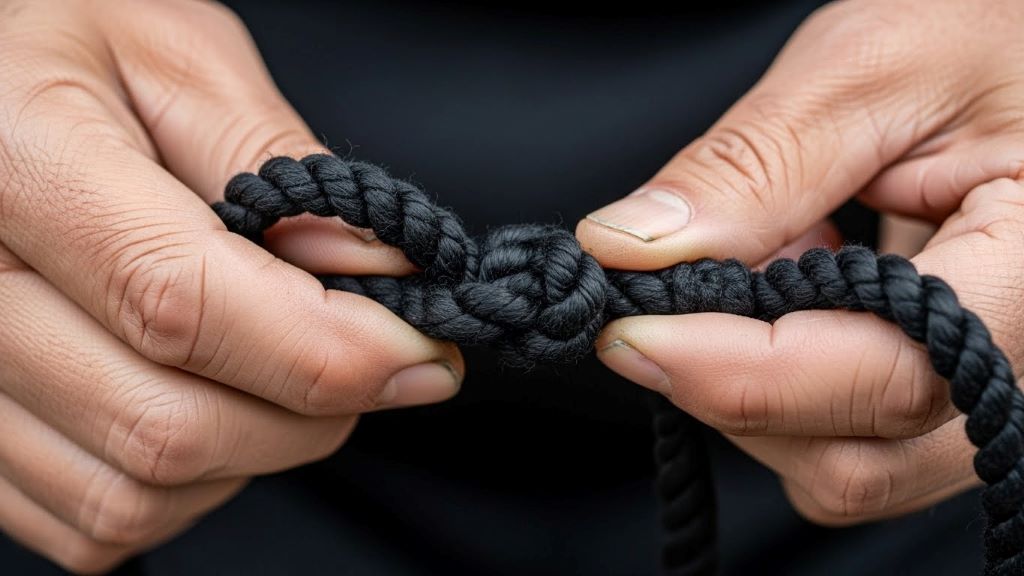
The foundation of every prayer rope lies in its knots. Each knot follows a specific pattern that creates stability. The traditional knot consists of multiple loops and crosses. This complex structure prevents the knots from loosening over time.
Learning the basic knot takes practice and patience. Beginners often struggle with maintaining consistent tension. The knot must be tight enough to hold but not so tight that it distorts. Finding this balance requires experience and careful attention.
Most traditional prayer ropes use a seven-loop knot. This number carries symbolic meaning in many religious traditions. Seven represents completeness and spiritual perfection. Each loop within the knot has its own significance in the overall pattern.
The knot’s internal structure creates a small cross. This cross becomes visible when the knot is properly formed. Therefore, each knot serves as a miniature reminder of faith. The repetition of this pattern throughout the rope reinforces its spiritual purpose.
Step-by-Step Traditional Making Process
Creating a prayer rope begins with preparing the materials. The maker cuts wool strands to appropriate lengths. Most ropes require strands several times longer than the finished product. This extra length accommodates the knot formation.
The first step involves creating a foundation loop. This loop serves as the anchor point for subsequent knots. The maker secures this loop carefully to maintain proper tension. Many artisans attach it to their belt or a fixed point during work.
Next, the maker forms the first knot using the established pattern. They weave the working strand through multiple loops. Each movement follows a precise sequence that creates the characteristic structure. The process requires concentration and steady hands.
After completing one knot, the maker tightens it carefully. They adjust the tension to match previous knots. Consistency in size and tightness creates a uniform appearance. This attention to detail distinguishes quality prayer ropes from rushed work.
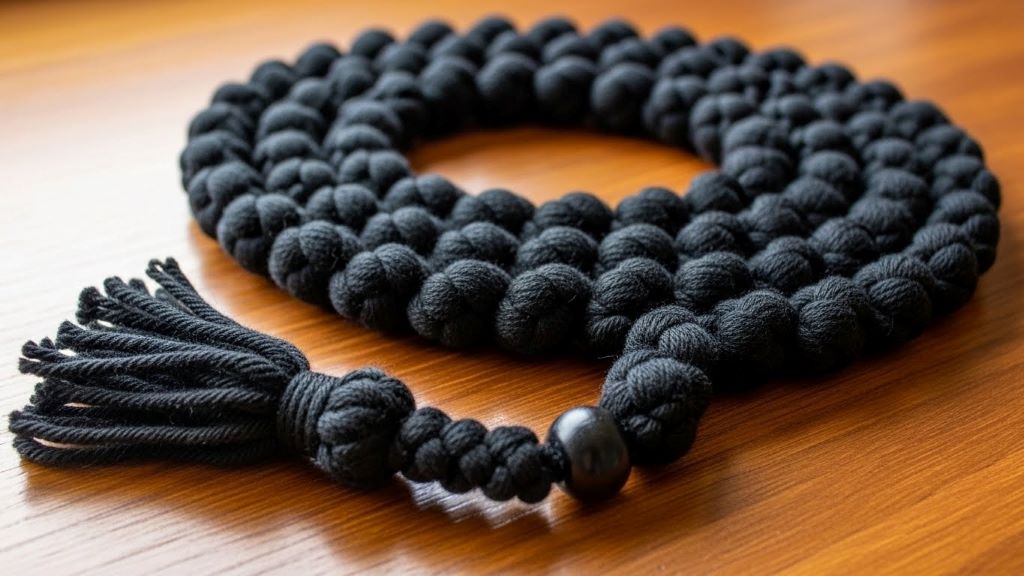
The maker repeats this process for each knot. Traditional prayer ropes contain specific numbers of knots. Common counts include 33, 50, 100, or 300 knots. Each number holds religious significance tied to prayer practices.
Advanced Techniques and Variations
Experienced rope makers develop their own refinements over time. Some create decorative elements between knot sections. These spacers might include beads, wooden elements, or different colored threads. However, traditional purists often avoid such additions.
The tension technique significantly affects the final product. Master craftspeople maintain perfectly uniform pressure throughout. This skill develops over years of practice. Consequently, their ropes have a distinctive professional appearance.
Some makers incorporate multiple colors in complex patterns. This technique requires planning and precise execution. The colors might represent different prayer types or spiritual themes. Additionally, colored sections can help practitioners track their progress through lengthy prayer sequences.
Another variation involves the rope’s length and closure method. Some makers create closed loops with no beginning or end. This design symbolizes eternal prayer and devotion. Others prefer ropes with definite endpoints marked by tassels or crosses.
The Role of Prayer During Creation
Traditional makers pray throughout the construction process. This practice transforms rope making into a spiritual exercise. Each knot becomes an offering of devotion. The repetitive motion encourages a meditative state.
Many Orthodox Christian monks who make prayer ropes recite the Jesus Prayer continuously. This prayer states, “Lord Jesus Christ, Son of God, have mercy on me, a sinner.” According to the Greek Orthodox Archdiocese of America, this prayer represents the essence of Orthodox spiritual practice. The rhythm of knotting synchronizes with the prayer’s cadence.
The prayerful creation process serves multiple purposes. First, it sanctifies the rope for future use. Second, it cultivates spiritual discipline in the maker. Third, it ensures that each rope carries genuine devotion.
Some traditions require makers to maintain specific spiritual preparations. They might fast or confess before beginning work. These practices emphasize the sacred nature of the craft. Therefore, prayer rope making transcends mere handicraft to become a religious act.
Quality Considerations and Common Mistakes
Identifying quality prayer ropes requires understanding construction standards. Well-made ropes have uniform knot sizes throughout. The knots sit snugly against each other without gaps. The overall rope maintains consistent thickness and flexibility.
Common beginner mistakes include irregular tension and incomplete knot formation. These errors create weak points that may unravel. Additionally, rushed work produces sloppy appearances that diminish the rope’s spiritual value.
The wool quality itself matters considerably. Premium wool creates smoother, more durable ropes. Cheaper materials may shed fibers or break easily. Moreover, poor quality wool makes the knotting process more difficult.
Testing a finished rope involves gentle stretching and examination. Quality ropes maintain their integrity under normal use. The knots should not slip or loosen with handling. A well-made prayer rope can last decades with proper care.
Preservation of Traditional Methods
Modern production methods have changed many crafts. However, traditional prayer rope making persists largely unchanged. Monasteries and religious communities maintain these ancient techniques. They pass knowledge from experienced makers to novices through direct instruction.
The preservation effort faces some challenges. Fewer people pursue this time-intensive craft today. Mass-produced alternatives offer convenience but lack spiritual authenticity. Nevertheless, demand for traditionally made prayer ropes remains strong among devout practitioners.
Some religious organizations have established formal teaching programs. These initiatives ensure the craft survives for future generations. Workshops and online tutorials make the knowledge more accessible. However, nothing replaces hands-on guidance from experienced makers.
The slow, meditative nature of traditional making conflicts with modern efficiency demands. Each rope requires hours of focused work. This investment of time reflects the value placed on spiritual practices. Therefore, traditionally made prayer ropes command respect and higher prices.
Conclusion
The traditional prayer rope making process embodies spiritual dedication through physical craft. From selecting appropriate wool to tying the final knot, each step carries significance. The seven-loop knot structure creates durable, meaningful tools for prayer and meditation. Master craftspeople spend years perfecting their technique while maintaining prayerful focus throughout creation.
This ancient practice continues thriving in monasteries and religious communities worldwide. The handmade ropes offer authenticity that manufactured alternatives cannot match. Additionally, the making process itself serves as a form of prayer and spiritual discipline. Whether creating a simple 33-knot rope or an elaborate 300-knot version, makers honor centuries of tradition with every loop and cross.
Understanding this traditional craft deepens appreciation for these sacred objects. The patience, skill, and devotion required transform simple wool into powerful spiritual tools. As modern life accelerates, the deliberate pace of prayer rope making offers a meaningful connection to timeless religious practices.
Frequently Asked Questions
How long does it take to make a traditional prayer rope?
A skilled maker typically requires two to four hours for a 100-knot prayer rope. Beginners may need considerably longer as they learn the technique. The time varies based on knot complexity, rope length, and the maker’s experience level. Some elaborate ropes with decorative elements can take several days to complete.
Can anyone learn to make prayer ropes, or is special training required?
Anyone with patience and dedication can learn traditional prayer rope making. However, many religious traditions encourage learning from experienced makers within monastic communities. While special training is not strictly required, guidance from a skilled teacher significantly shortens the learning curve and ensures proper technique.
What is the significance of the number of knots on a prayer rope?
Different knot counts serve various prayer practices and traditions. Thirty-three knots represent Christ’s years on earth. Fifty knots correspond to Pentecost. One hundred knots provide a substantial prayer cycle. Three hundred knots challenge practitioners to extended devotional periods. Each number connects to specific religious meanings and prayer disciplines.
How do you care for and maintain a traditional wool prayer rope?
Store prayer ropes in dry, clean places away from direct sunlight. Avoid exposing them to moisture, which can damage wool fibers. Handle them gently during use to prevent excessive wear. If cleaning becomes necessary, spot-clean carefully rather than washing completely. Many believers consider prayer ropes sacred objects requiring respectful treatment.
What is the difference between a prayer rope and a rosary?
Prayer ropes use knotted wool construction while rosaries typically feature beads on a string. Prayer ropes originated in Eastern Christian monasticism, whereas rosaries developed in Western Catholic tradition. The prayer practices associated with each also differ, though both serve as counting tools for devotional exercises.
Related Topics:
PropelTech 50ft Premium Boat Anchor Rope – Durable Nylon with Thimble & Shackle
Best Mule Tape Rope for Cable Pulling in 2025: Top Picks Reviewed