Rhino USA Kinetic Recovery Rope Review: Worth It?
This Rhino USA Kinetic Recovery Rope review comes from a research desk, so treat it as a dig through the listing, the spec panel and 1,273 buyer ratings rather than a field test. Rhino USA sells this as a 1 in x 30 ft kinetic rope with a 33,600 lb maximum breaking strength, and it currently holds 4.8 out of 5 stars plus a #10 spot in Amazon’s Tow Straps category.
It’s worth the money if you drive a Jeep, mid-size truck, UTV or ATV and want one stretchy line that covers sand, snow and mud. Skip it if your recovery vehicle is a loaded one-ton diesel, or if you’d rather buy a kit with the shackles included. The numbers are in the card below.
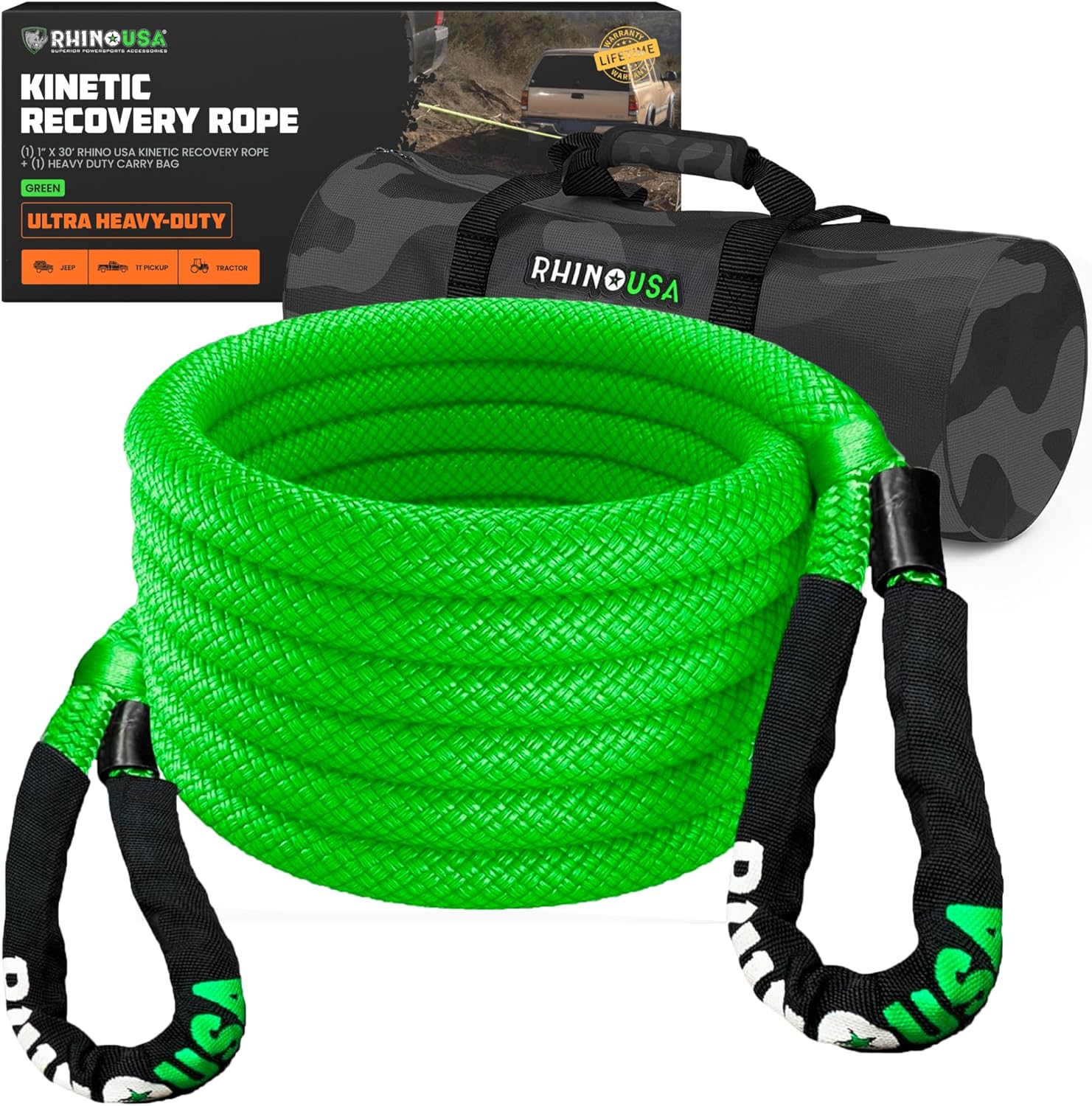
1. Rhino USA Kinetic Recovery Rope
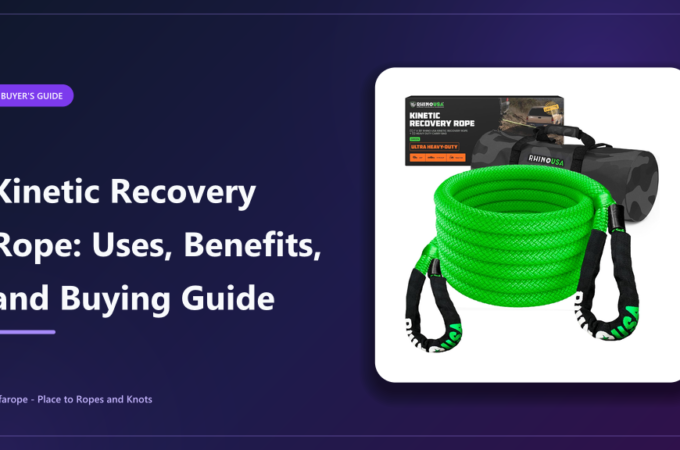
Rhino’s 1 in x 30 ft kinetic rope is the green middle child of a six-size family, and it’s the version most mid-size owners end up buying. The manufacturer lists a 33,600 lb maximum breaking strength, a synthetic UHMWPE weave and an unlimited lifetime warranty. Below is what the listing promises and what buyers actually report.
What it is
A kinetic recovery rope is a stretchy synthetic tow line that stores energy during a pull and hands it back in one smooth surge, which is how a rolling recovery vehicle frees a stuck one without a violent shock. This green 1 in x 30 ft model sits in the middle of Rhino USA’s range, and as of 2026 that range runs from a 5/8 in x 20 ft version up to a 1.25 in x 30 ft black rope. Rivals worth comparing include Yankum Ropes, Bubba Rope and ARB, all of which build similar lines. UHMWPE is a synthetic polyethylene fiber that rope makers use because it resists rot, keeps its strength when wet and stays light for its size.
Setup and first impressions
Buyers consistently describe the rope arriving as a stiff, heavy coil inside the zippered storage bag, and most say it relaxes after the first couple of pulls. The bag draws mixed feedback: people like the space for soft shackles and a hitch receiver, but a handful call the zipper the weak point. Plan on a few minutes of working the weave flat before your first recovery, because a kinetic rope wants to stay coiled until it’s loaded.
The manufacturer lists stainless steel hardware, and owners report the spliced eyes staying tight after repeated muddy weekends. Green is the only color in this size, and several reviewers call that a plus in low light because it stands out against sand, snow and dirt. Nobody in the reviews we read describes a rope failing under a load within its rating. First impressions overall: purposeful, slightly industrial, and noticeably heavier than a tow strap of the same length.
| Size | 1 in x 30 ft |
| Maximum breaking strength | 33,600 lb |
| Listed load capacity | 34,370 lb |
| Material | Synthetic fiber weave (UHMWPE) |
| Hardware material | Stainless steel |
| Color | Green |
| Listed item dimensions | 240 in length x 0.62 in width |
| Compatible vehicle types | ATV, truck, UTV |
| Storage | Zippered heavy duty bag included |
| Warranty | Unlimited lifetime warranty |
Day-to-day use
How does the stretch behave in sand and mud?
A kinetic pull works because the rope behaves like a spring. The recovery vehicle rolls forward, the line stretches, and the stored energy reaches the stuck vehicle as a surge instead of a shock. Rhino lists the ability to stretch and store up to 4x more energy than a tow strap, and buyer reports back that up: people describe walking a buried truck out of soft sand on the second or third pull rather than the first. The 30 ft length is what gives you room to build that stretch without running out of line. In deep mud the limiting factor is usually the recovery vehicle’s traction, not the rope.
Does the build quality hold up?
The weave is the part reviewers talk about most. UHMWPE is tough for its weight and doesn’t rot like natural fiber, so a wet, muddy rope can go back in the bag without drama. Owners report the spliced eyes staying tight after a season of weekend recoveries, and stainless steel is the right choice for anyone working near salt water. Abrasion is the real enemy: dragging the rope across rock or a sharp bumper edge will fuzz the outer sheath, and that shows up in several reviews. Check the eyes and the first few feet after every hard pull.
Is it easy to handle and store?
At 1 in thick and 30 ft long, this isn’t a rope you tuck into a glovebox. Buyers describe it as heavy enough to need two hands when coiling and stiff enough to fight back for the first few uses. The zippered bag is the fix: it swallows the rope plus a pair of soft shackles and a hitch receiver, and it keeps the coil tidy between trips. Cleanup matters more than storage. Rinse off mud, let it dry fully, and keep it out of long sun exposure, because UV is what ages synthetic rope fastest.
Where it stops: safety gear and heavy loads
Two things decide whether a kinetic pull ends well: rated anchor points and a damper. A recovery damper is a weighted blanket that goes over the rope’s middle so a failure drops instead of flies. A D-ring shackle or a receiver hitch shackle mount gives you a proper anchor, and a tow ball is never one. The other limit is the vehicle. A 33,600 lb breaking strength sounds enormous until you add mud suction and a dead stop, and a loaded one-ton truck sits outside what most owners should try with a 1 in rope. Winch owners comparing approaches can read our YUNPEAK synthetic winch rope kit review for the slow and steady alternative.
- 33,600 lb maximum breaking strength covers Jeeps, mid-size pickups, UTVs and ATVs.
- The stretch stores far more energy than a static tow strap, so pulls feel smoother.
- UHMWPE weave resists rot and shrugs off wet, muddy storage.
- Unlimited lifetime warranty from a family-run US business.
- The zippered bag fits the rope plus soft shackles and a hitch receiver.
- 1 in x 30 ft is on the light side for a loaded one-ton or heavy expedition build.
- Shackles and a hitch receiver are not included, so budget for rigging.
- The storage bag zipper draws the most complaints across buyer reviews.
- The listing’s dimension field reads 0.62 in wide while the title says 1 in, so confirm diameter before buying.
Who should buy it
Buy it if you…
You drive a Jeep, a mid-size pickup, a UTV or an ATV and want one rope that handles sand, snow and mud without stretching the budget too far. You prefer a rolling pull to a jolt, and you’re happy to buy soft shackles separately. The lifetime warranty and the father-and-sons business story matter to you. If you’re still mapping out a kit and want to compare rope types first, our roundup of the best affordable outdoor and climbing ropes for 2026 covers the value end of the market.
Skip it if you…
Your recovery vehicle is a heavy tow rig and your stuck vehicle is a loaded one-ton or a lifted expedition truck. You want one box that arrives with shackles, a hitch receiver and a damper, because this listing is the rope and bag only. You never leave pavement and just need to drag a trailer across a yard, where a static tow strap does the job for less. And if exact diameter matters, check the size chart, because this is one of six variants.
Alternatives to consider
Yankum Ropes builds a comparable UHMWPE kinetic line with a strong following among overlanders, and Bubba Rope’s Big Bubba is the other name that turns up in every recovery thread. Both sit in the same bracket or above it. If you’d rather buy a package with hardware included, our AXSIPEIX 1 in x 30 ft kinetic recovery rope kit review covers one. Rhino also sells this rope in 5/8 in, 7/8 in and 1.25 in sizes if you need to go smaller or heavier.
Frequently asked questions
Is the Rhino USA kinetic recovery rope worth the money?
Based on the 4.8 average across 1,273 ratings and the listed 33,600 lb breaking strength, yes, if a mid-size rig is what you drive. It sits in the mid-range bracket rather than the budget end, and you’re paying for a US-based brand, a lifetime warranty and a storage bag. Where it stops making sense is heavy recovery work. Compare the cost against Yankum Ropes and Bubba Rope before you commit, since both sell comparable UHMWPE lines.
What vehicles is the Rhino USA kinetic recovery rope compatible with?
The manufacturer lists ATV, truck and UTV as compatible vehicle types, and buyer reviews add Jeep Wranglers, mid-size pickups and side-by-sides to that list. It suits anything in the Jeep and half-ton bracket once you account for mud suction and a safety margin. A loaded one-ton dually or a heavy expedition trailer calls for a bigger rope and a conversation with the manufacturer, even though the headline number looks generous.
How does a kinetic recovery rope differ from a tow strap?
A tow strap is a static line that pulls with almost no stretch, so the tug arrives as a jolt. A kinetic recovery rope is built to stretch under load and release that energy gradually, which is why Rhino claims it can store and release up to 4x more energy than a tow strap. In practice you get a rolling start instead of a yank. Tow straps still earn their place for flat-ground towing at low speed behind another vehicle.
What is the breaking strength of the Rhino USA kinetic recovery rope?
The manufacturer lists a 33,600 lb maximum breaking strength for the 1 in x 30 ft version, with a 34,370 lb load capacity figure elsewhere on the spec panel. Breaking strength is the load at which a rope is expected to fail, so it is not a working limit. Stay well under it, anchor to rated recovery points, and remember that mud suction and a dead stop add load that a smooth rolling pull avoids.
How do I use and maintain a kinetic recovery rope properly?
Rig it to rated recovery points on both vehicles, never a tow ball, and use soft shackles at each end. A soft shackle is a loop of synthetic rope that closes on itself, so it adds no heavy metal to the system. Then follow three steps:
- Lay the rope out flat so it can stretch without a kink.
- Drape a recovery damper over the middle before the pull.
- Drive with a steady rolling start, not a jerk.
After use, rinse off mud, dry it fully and store it out of direct sun.
Final verdict
We land on 4.6 out of 5. The Rhino USA Kinetic Recovery Rope does the one job that matters: it turns a dead-stop yank into a rolling pull, and the 33,600 lb breaking strength leaves sensible headroom for Jeeps, mid-size trucks, UTVs and ATVs. The unlimited lifetime warranty and the included bag are real extras at this point in the market rather than marketing garnish.
The caveats are narrow but worth knowing. Rigging isn’t included, the bag’s zipper is the most common complaint we found across reviews, and the listing’s own width field doesn’t match the 1 in in the title. If you tow heavy, or you’re building a full recovery kit from zero, size up or buy a package. For everyone else heading into the 2026 season, this is an easy recommendation and a rope that earns its place behind the seat.
Affiliate disclosure: This article contains affiliate links. If you buy through them we may earn a commission at no extra cost to you. It does not change which products we recommend.