Naha Tug-of-War Festival 2026: Schedule, Location and Insider Tips
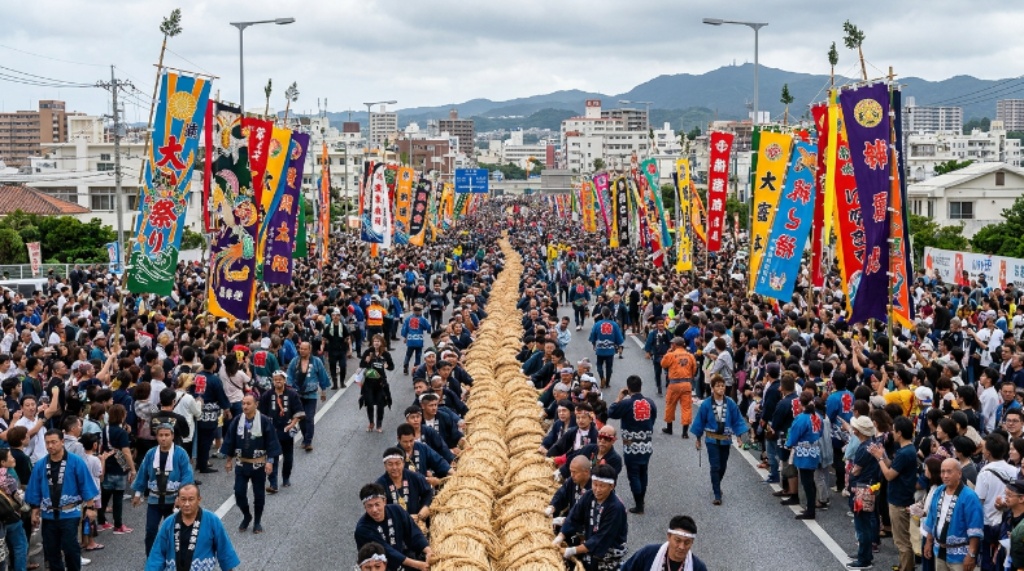
Every October, the streets of Naha, Okinawa transform into one of the most electrifying scenes in all of Japan. A 200-meter rope weighing over 40 tons is laid across a closed highway. Thousands of people grip its braided sides. Then, with a crack of a confetti ball and a roar from a quarter of a million spectators, the battle begins.
This is the Naha Tug-of-War Festival, known locally as Naha Otsunahiki. It is the biggest tug-of-war event on Earth. It holds a Guinness World Record and draws over 270,000 participants and spectators each year. And in 2026, it returns on October 11 as the 56th edition of this beloved Okinawan tradition.
Whether you are visiting Okinawa for the first time or making a return trip, this is a festival you should experience in person. This guide covers everything you need to know: the history, the 2026 schedule, the location, what to expect, and the insider tips that will help you make the most of the day.
A Tradition Over 500 Years in the Making
The roots of this festival stretch back to around 1450, when it began as the Keiga Tug in the old Ryukyu Kingdom. Back then, it was far more than a competition. Communities gathered to pull the rope as a ritual prayer. They asked the gods for rain, a healthy harvest, and protection from hardship. The outcome of the tug was believed to predict the fortunes of the coming year.
During the days of the Ryukyu Kingdom, the festival also served as entertainment for visiting Chinese envoys. It was a way of demonstrating the vitality and spirit of the Okinawan people. However, as Naha grew into a city, the original tradition faded. Organizers revived the modern version in 1971 to mark the 50th anniversary of the founding of Naha City. Since then, it has grown steadily into an internationally known event.
In 1995, the Guinness Book of World Records officially recognized the festival’s rope as the world’s largest rice straw rope used in a tug-of-war. The record was updated again in 1997 with an even larger rope. Today, the festival holds the distinction of being the largest tug-of-war event on the planet, a title it has worn proudly for decades.
The event is also officially recognized as an Intangible Folk Cultural Asset of Japan. That recognition reflects how deeply the tradition is woven into Okinawan identity. It is not simply a spectacle for tourists. It is a living piece of cultural heritage that the people of Naha feel personally connected to.
The 2026 Festival Schedule at a Glance
The 2026 Naha Tug-of-War Festival runs across three days from October 10 through October 12, centered around the national holiday known as Health and Sports Day. The main tug-of-war event takes place on Sunday, October 11, which is the 56th edition of the modern festival.
Here is how the schedule unfolds:
- October 10 (Saturday), 5:00 PM onward: The Citizen Entertainment Festival and Traditional Performing Arts Parade takes place on Kokusai Street. Over 50 groups perform stage events in front of Palette Kumoji Square and parade through the famous shopping street. This evening celebration serves as a lively warm-up to the main event and draws large crowds of its own.
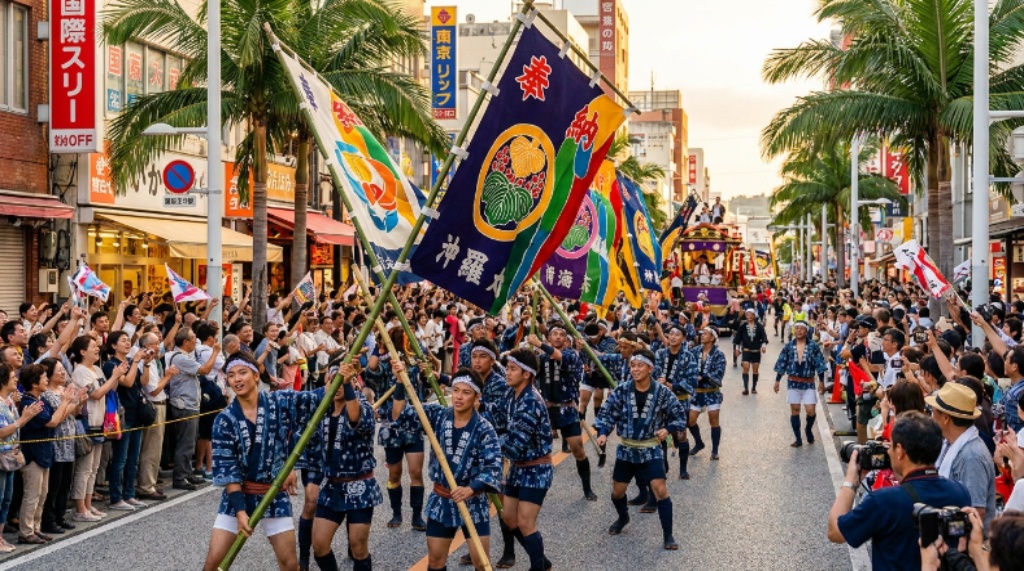
- October 11 (Sunday), 11:30 AM – 2:00 PM: The Hatagashira banner procession begins on Kokusai Street. Fourteen youth organizations parade proudly with their enormous handcrafted banners, each one representing a district of Naha City. Karate demonstrations and firecracker displays fill the street with sound and energy.
- October 11 (Sunday), 2:30 PM – 5:00 PM: Route 58 between the Matsuyama and Izumizaki intersections is closed to all vehicle traffic. The opening ceremony takes place, followed by traditional performances and martial arts displays. The two ropes are brought together and joined ceremoniously around 4:00 PM. The tug-of-war itself then begins and lasts for 30 minutes.
- October 10 through October 12: The RBC Citizens Festival runs concurrently at Onoyama General Sports Park, offering live music, food stalls, fireworks, and additional stage events across all three days. The park opens at 11:00 AM and closes at 9:00 PM each day.
Where the Festival Takes Place
Festival organizers spread the main events across two central locations in downtown Naha, both easily accessible by public transport.
Kokusai Street, known locally as Kokusai-dori, serves as the parade route for both the Hatagashira procession and the traditional performing arts parade. This is Naha’s most famous shopping and entertainment street. It runs through the heart of the city and is well signposted from the Makishi monorail station on the Yui Rail line.
The Kumoji Intersection area on National Route 58 is where the main tug-of-war competition takes place. This is the heart of the action. Route 58 is typically one of the busiest roads in Okinawa, but it is fully closed to traffic on the afternoon of the main event. The rope stretches along the highway like a colossal snake, and thousands of people fill every available space on both sides.
The RBC Citizens Festival takes place at Onoyama General Sports Park, located at coordinates 26.204450, 127.676153. This venue is easily reached by monorail from central Naha.
What Actually Happens at the Tug-of-War
Understanding what takes place on the day will help you appreciate the ceremony and the symbolism behind each moment.
The rope itself is a marvel of craftsmanship.
It is made entirely by hand each year using rice straw and natural materials. The structure consists of two separate sections: the female rope, called Miinna, which belongs to the West team, and the male rope, called Woounna, which belongs to the East team. The two halves are each about 100 meters long.
Before the competition begins, officials ceremoniously join the two ropes using a large wooden rod called the kanuchibou. This act requires the assistance of local officials and festival attendees working together. Once connected, the rope reaches its full length of 200 meters and weighs approximately 40 to 43 metric tons.
The Hatagashira banners play an important role in the ceremony leading up to the pull. These flags, each reaching up to 10 meters in height and weighing up to 60 kilograms, are carried and danced by young men in traditional Okinawan dress. Carrying a Hatagashira is considered a lifelong honor. Watching these young men spin and balance the towering banners through skillful choreography is one of the most memorable sights of the entire festival.
After the two ropes are joined,
figures dressed as Ryukyu Kingdom rulers stand atop the rope in a ceremonial re-enactment. The competition officially begins when a confetti-filled ball is split open. Each side then pulls with all its might. The goal is to move the rope more than five meters in their direction within 30 minutes. The first team to do so wins.
With 15,000 active pullers and hundreds of thousands of spectators cheering from the sides, the atmosphere during those 30 minutes is unlike anything else. The chant of “haaiya, haaiya” echoes through the street as the crowd surges forward and backward in waves.
When the winner is declared, the celebration begins immediately. Participants climb atop the winning section of rope. Everyone joins in the traditional Okinawan kachaashii hand dance together. Additionally, in a long-standing custom, spectators rush to cut pieces of the rope to take home. Locals believe that keeping a piece of the rope brings good luck and prosperity. Pocket knives, scissors, and small saws all appear from pockets as the crowd descends on the rope.
Who Can Participate and How
One of the most special things about this festival is that it is genuinely open to everyone. You do not need to register in advance or belong to any community group. Visitors from any country are welcome to grab one of the hand ropes attached to the main rope and pull alongside the locals.
To join in, simply move toward the rope on the day and find a section with space. Follow the lead of the people around you and listen for the chant. Wearing comfortable shoes and clothing you do not mind getting dusty is recommended. The rope is rough and large, so gripping a hand rope rather than the main braid is how most participants take part.
Children can also participate. The atmosphere is energetic but not dangerous in the public areas. Therefore, families with young children are a common sight.
Insider Tips for Attending in 2026
Preparation makes a significant difference at this event. Here are the tips that experienced attendees recommend.
Arrive early for the best viewing spots. Route 58 fills up quickly once it closes to traffic at 2:30 PM. If you want a clear view of the rope joining ceremony and the start of the pull, aim to be in position by 3:00 PM or earlier. The elevated walkways and side streets near the Kumoji Intersection offer good vantage points.
Take the Yui Rail monorail rather than driving. The road closures in central Naha make driving and parking extremely difficult on the main event day. The Kencho-mae station is the closest stop to the main venue. Additionally, the Makishi station places you at the northern end of Kokusai Street, which is ideal for watching the morning parade.
Wear comfortable, breathable clothing. October in Okinawa is still warm, with daytime temperatures typically reaching around 25 to 28 degrees Celsius. Humidity is moderate at this time of year. Light clothing and good walking shoes are the right choice.
Take a small piece of the rope if you get the chance. It may feel chaotic when the cutting begins, but joining in is part of the experience. That small strand of straw rope serves as a genuine keepsake and a meaningful connection to a tradition that is over 500 years old.
Getting to Naha and the Festival Venue
Naha Airport is the main entry point for visitors traveling to Okinawa from mainland Japan or internationally. Direct flights connect Naha to Tokyo, Osaka, Taipei, Seoul, and several other regional cities.
From Naha Airport, the Yui Rail monorail travels directly into the city center. The journey to Kencho-mae station, the closest stop to the main venue, takes approximately 15 minutes and costs a few hundred yen.
If you are staying in the Naha area, most centrally located hotels are within walking distance of the festival venues. The area around Kokusai Street has a good range of accommodation options at various price points. Booking well in advance for October 10 through 12 is strongly advised, as this is one of the busiest weekends of the year in Okinawa.
Conclusion
The Naha Tug-of-War Festival is a singular event. It is part cultural ceremony, part communal sport, and part living history lesson. In 2026, the 56th edition of this incredible tradition returns on October 11, bringing together 15,000 active participants and over 270,000 spectators along the streets of downtown Naha, Okinawa. The three-day celebration spans October 10 through 12, with the Hatagashira parade, the connecting of the giant rope, and the main pull forming the emotional core of the experience. The two venues — Kokusai Street and Route 58 near the Kumoji Intersection — are accessible by monorail and easy to navigate. Anyone can participate in the pull, no registration required. Arriving early, taking the train, bringing cash, and staying for the evening celebration will make the experience far richer. This is not a festival you watch from a distance. You are expected to grab a rope and pull.
Frequently Asked Questions
When exactly is the Naha Tug-of-War Festival in 2026?
The main tug-of-war event takes place on Sunday, October 11, 2026. The Hatagashira banner parade begins at 11:30 AM on Kokusai Street, and the main pull on Route 58 takes place from approximately 2:30 PM to 5:00 PM. Surrounding events, including the RBC Citizens Festival and the Traditional Performing Arts Parade, run from October 10 through October 12.
Can tourists join the tug-of-war?
Yes, absolutely. The event is open to everyone regardless of nationality, age, or background. Simply approach the rope on the day and take hold of one of the smaller hand ropes attached to the main braid. No advance registration is needed. Locals actively welcome visitors to pull alongside them.
How do I get to the main venue from central Naha?
The closest monorail station to the main tug-of-war venue is Kencho-mae on the Yui Rail line. From Naha Airport, the journey takes approximately 15 minutes. Driving is not recommended on the day due to road closures around Route 58 and Kokusai Street.
What is the Hatagashira procession?
Hatagashira refers to the giant handcrafted banners carried by young men representing the 14 districts of Naha City. Each banner stands up to 10 meters tall and weighs up to 60 kilograms. The carriers perform choreographed movements and balance routines as they parade down Kokusai Street. It is considered a great honor to carry a Hatagashira, and the procession is one of the highlights of the festival.
What should I bring to the festival?
Bring cash for food stalls and vendors, comfortable shoes, and light breathable clothing suited to warm October weather in Okinawa. Wear clothes you do not mind getting dusty or marked from the straw rope if you plan to participate. A small bag or backpack for souvenirs and a water bottle are also recommended.