
How to Pick Vacuum Cleaners for Business Use?
Keeping commercial spaces clean requires more than regular household equipment. Businesses across the USA spend billions annually on cleaning services and maintenance equipment to maintain professional environments. According to industry reports, indoor cleanliness directly affects customer satisfaction and employee productivity. Therefore, choosing the right vacuum cleaners for business use becomes an important investment decision for companies of every size.
Commercial cleaning demands vary significantly between industries and facilities. A retail store has different requirements than a hotel, warehouse, or healthcare center. Consequently, understanding the critical selection factors helps businesses reduce costs while improving cleaning performance and operational efficiency.
Why Choosing the Right Business Vacuum Cleaner Matters
Commercial vacuum cleaners operate under demanding conditions every day. Unlike residential models, business equipment must withstand extended operating hours and larger cleaning areas. Therefore, selecting the wrong machine often results in higher maintenance expenses.
Professional cleaning equipment also affects employee productivity. Workers complete tasks faster when using efficient and ergonomic machines. As a result, businesses save both labor costs and operational time.
Additionally, modern commercial vacuum cleaners improve indoor air quality. Advanced filtration systems capture allergens, dust particles, and contaminants more effectively. This benefit becomes especially important in healthcare, hospitality, and office environments.
Identify Your Business Cleaning Requirements
Every business environment creates unique cleaning challenges. Therefore, evaluating your specific operational needs should become your first priority. Understanding these factors prevents costly purchasing mistakes.
Evaluate Facility Size
Small offices require different equipment than warehouses or shopping centers. Larger facilities benefit from higher capacity machines that reduce emptying frequency. Consequently, cleaning efficiency increases significantly.
Measure the total cleaning area before purchasing equipment. Also consider future business expansion plans. This approach ensures long term value.
Analyze Floor Types
Different flooring materials require different cleaning technologies. Carpeted spaces need strong suction and brush systems. Meanwhile, hard floors require adjustable settings and specialized attachments.
- Carpet flooring
- Hardwood surfaces
- Tile flooring
- Concrete floors
- Vinyl surfaces
- Mixed flooring environments
Selecting a vacuum compatible with multiple surfaces provides greater operational flexibility. Therefore, many businesses prefer multi surface commercial models.
Understand Commercial Vacuum Cleaner Types
Commercial vacuum cleaners come in several categories. Each design serves specific business applications. Understanding these differences simplifies purchasing decisions.
Upright Commercial Vacuums
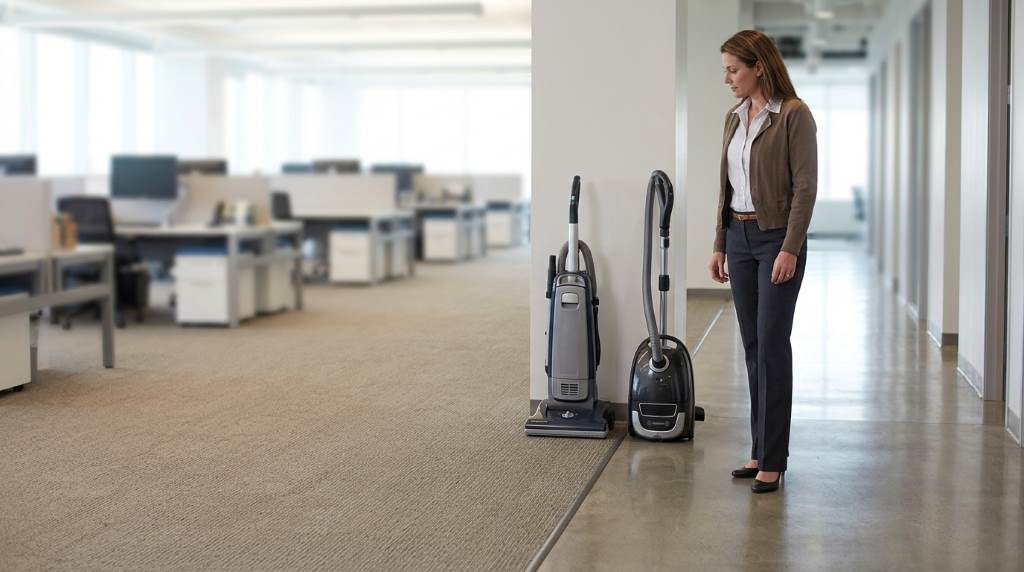
Upright models remain popular for carpet intensive environments. They provide strong suction performance and wide cleaning paths. Consequently, cleaning staff complete tasks more quickly.
These machines work particularly well in hotels, schools, and office buildings. Their straightforward operation also reduces employee training requirements.
Canister Commercial Vacuums
Canister vacuums offer excellent maneuverability and versatility. They perform effectively in tight spaces and multi surface environments. Therefore, many businesses prefer them for detailed cleaning tasks.
These units also work well on stairs and furniture. Their flexible hose systems improve accessibility considerably.
Backpack Vacuums
Backpack vacuums increase productivity in large facilities. Cleaning professionals can move freely while maintaining consistent suction performance. Consequently, labor efficiency improves substantially.
Airports, schools, and event venues frequently use backpack systems. Their ergonomic design reduces operator fatigue during extended shifts.
Wet and Dry Vacuums
Industrial environments often require wet and dry vacuum systems. These machines handle liquid spills and dry debris simultaneously. Therefore, they provide exceptional versatility.
Manufacturing facilities and warehouses commonly rely on these units. Their durability supports demanding operational conditions.
Consider Suction Power and Motor Performance
Suction capability directly influences cleaning effectiveness. Strong motors remove dirt more efficiently while reducing cleaning time. Consequently, businesses improve operational productivity.
Commercial vacuum motors typically range from 500 to 1500 watts. However, airflow and sealed suction measurements often provide more meaningful performance indicators.
Look for machines with consistent suction under heavy workloads. This feature ensures reliable performance throughout daily operations.
Evaluate Filtration Systems
Air quality standards continue becoming more important across industries. Therefore, filtration performance deserves careful consideration during equipment selection.
HEPA filtration systems capture microscopic particles effectively. These filters remove allergens, bacteria, and airborne contaminants. Consequently, businesses create healthier indoor environments.
Industries benefiting most from HEPA filtration include:
- Healthcare facilities
- Hotels and hospitality businesses
- Educational institutions
- Corporate offices
- Retail stores
- Government facilities
Assess Durability and Construction Quality
Commercial vacuum cleaners represent long term investments. Therefore, construction quality significantly impacts ownership costs.
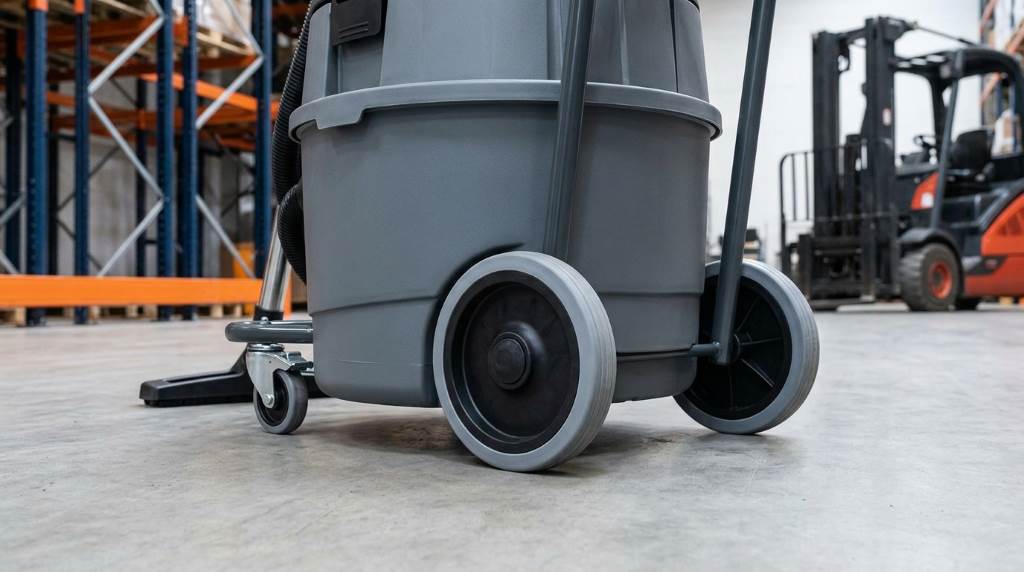
Look for reinforced housings, metal components, and commercial grade wheels. These features improve durability under daily usage conditions. As a result, equipment lifespan increases substantially.
Additionally, examine warranty coverage and manufacturer reputation. Established brands typically provide better service support and replacement parts availability.
Review Noise Levels
Noise pollution affects both employees and customers. Therefore, quieter commercial vacuums provide operational advantages in many environments.
Offices, hotels, and healthcare facilities particularly benefit from low noise equipment. Machines operating below 70 decibels generally offer acceptable performance levels.
Quiet operation also enables cleaning during business hours. Consequently, companies improve scheduling flexibility.
Check Ergonomics and Ease of Use
Employee comfort directly affects productivity and workplace safety. Therefore, ergonomic design should influence purchasing decisions.
Consider machine weight, handle design, and maneuverability. Lightweight equipment reduces physical strain during extended cleaning sessions. As a result, employee satisfaction improves.
Other ergonomic features include:
- Adjustable handles
- Comfort grips
- Swivel steering
- Easy cord management
- Simple control layouts
- Quick attachment changes
Analyze Maintenance Requirements
Maintenance costs significantly affect total ownership expenses. Therefore, selecting easy to maintain equipment improves long term profitability.
Evaluate filter replacement schedules, brush maintenance requirements, and bag capacities. Machines with simplified maintenance procedures reduce operational downtime.
Additionally, consider spare part availability. Accessible replacement components prevent costly service interruptions.
Consider Energy Efficiency
Energy efficient equipment reduces operating expenses over time. Consequently, many businesses now prioritize power consumption ratings.
Modern commercial vacuum cleaners often deliver stronger performance while consuming less electricity. Therefore, businesses benefit from lower utility costs.
Energy efficient models also support sustainability initiatives. This advantage enhances corporate environmental responsibility programs.
Compare Total Cost of Ownership
Purchase price represents only one component of business vacuum expenses. Therefore, evaluating total ownership costs provides a more accurate financial assessment.
Consider these cost factors:
- Initial purchase price
- Maintenance expenses
- Replacement parts costs
- Energy consumption
- Employee labor efficiency
- Expected equipment lifespan
Sometimes premium equipment delivers lower overall costs. Consequently, businesses should prioritize long term value rather than initial savings.
Questions to Ask Before Purchasing
Businesses should carefully evaluate vendors before making final decisions. Asking the right questions prevents future problems and unexpected expenses.
- What warranty coverage exists?
- Are replacement parts readily available?
- What maintenance schedule is required?
- Does the vacuum support multiple surfaces?
- What filtration standards does it meet?
- How long is the expected service life?
Obtaining detailed answers improves purchasing confidence. Therefore, businesses make better investment decisions.
Conclusion
Selecting the best commercial vacuum cleaner requires careful evaluation of business requirements, facility characteristics, and long term operating costs. Businesses that prioritize durability, filtration quality, ergonomics, and maintenance efficiency typically achieve better results.
Take time to assess your cleaning needs thoroughly before purchasing equipment. Investing in the right commercial vacuum cleaner today can improve productivity, reduce costs, and maintain a cleaner professional environment for years.
Frequently Asked Questions
What type of vacuum is best for office buildings?
Canister and backpack commercial vacuums typically work best for office environments.
Are HEPA filters necessary for business vacuum cleaners?
HEPA filters are highly recommended for improved indoor air quality and allergen control.
How long do commercial vacuum cleaners usually last?
Quality commercial vacuum cleaners often last between five and ten years.
Should businesses choose bagged or bagless vacuums?
Bagged models generally provide better dust containment and easier maintenance.
Do energy efficient commercial vacuums save money?
Yes, energy efficient models reduce electricity consumption and long term operating costs.