How To Throw A Rope For Life Preserver Ring: A Safe Rescue Guide
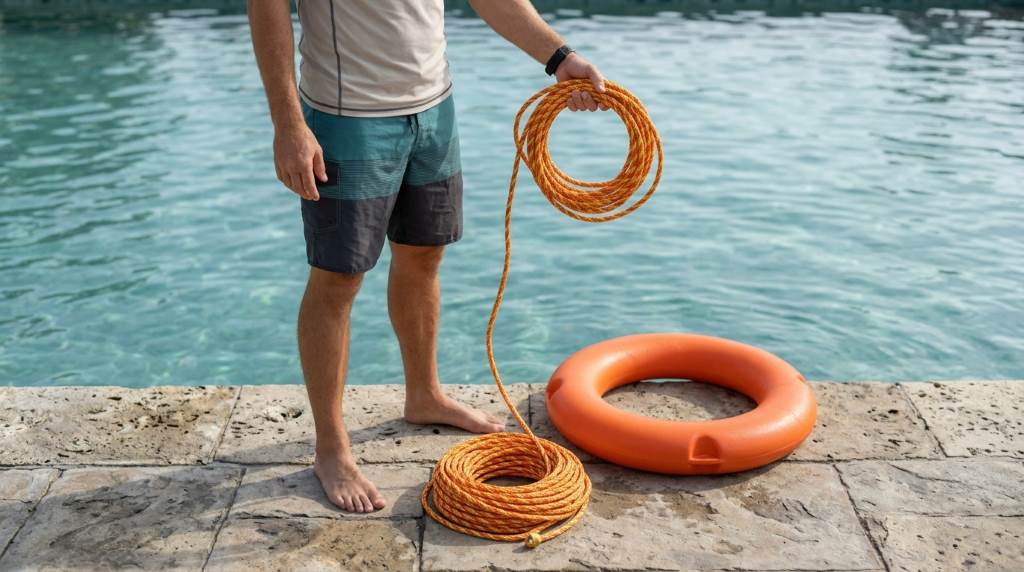
Throw a life preserver ring with an underhand motion, aiming just beyond the person in trouble. Keep the rope controlled, avoid wrapping it around your hand, and pull gently after they secure the ring. A properly prepared Rope for life preserver ring makes this rescue method faster and safer. The CDC reports about 4,000 unintentional drowning deaths annually in the United States. It also estimates roughly 8,000 nonfatal drowning incidents each year. Therefore, knowing how to deploy a ring correctly can provide crucial assistance before professional rescuers arrive.
Key Takeaways
- Call emergency services immediately and keep yourself safely out of the water.
- Secure the rope before throwing so the ring cannot drift away.
- Use an underhand throw and aim slightly beyond the person.
- Keep the rope loose enough to run freely without forming dangerous loops.
- Tell the person exactly what you are throwing and where to reach.
- Pull slowly after the person gains a secure grip on the ring.
Why Proper Life Ring Throwing Matters
A life preserver ring provides flotation while keeping the rescuer away from dangerous water. However, poor throwing technique can waste precious seconds or create additional hazards. A panicked person may also struggle to grab an object that lands too far away.
Therefore, the goal is not simply to throw the ring toward someone. You need to deliver the flotation device within easy reach while maintaining control of its tether. This approach supports the basic reach, throw, and rescue principle used in water-safety training.
Prepare Before You Throw
Preparation determines whether your throw succeeds on the first attempt. First, call emergency services or direct another person to make the call. Then locate the life ring and inspect the attached rope before approaching the water’s edge.
Check The Rope
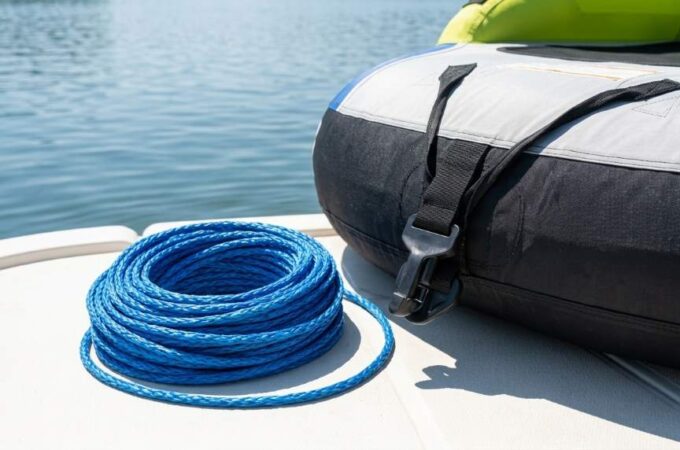
Make sure the rope has enough length to reach the person without becoming fully extended. Remove obvious knots, tangles, twists, or loops that could stop the line during deployment.
Next, arrange the rope so it can pay out freely during the throw. Never create a tight coil around your wrist, arm, ankle, or body. That mistake can pull you toward the water when the ring moves.
Establish Stable Footing
Stand on stable ground with enough space behind you for balance. Keep your feet outside the rope loops and avoid slippery edges, loose rocks, or unstable surfaces.
If another capable person stands nearby, ask them to assist with emergency communication or crowd control. However, never allow an untrained helper to interfere with the rope’s movement.
The Correct Throwing Technique
The most practical technique uses a controlled underhand motion. This method gives you useful accuracy while reducing the chance of throwing the ring dangerously high.
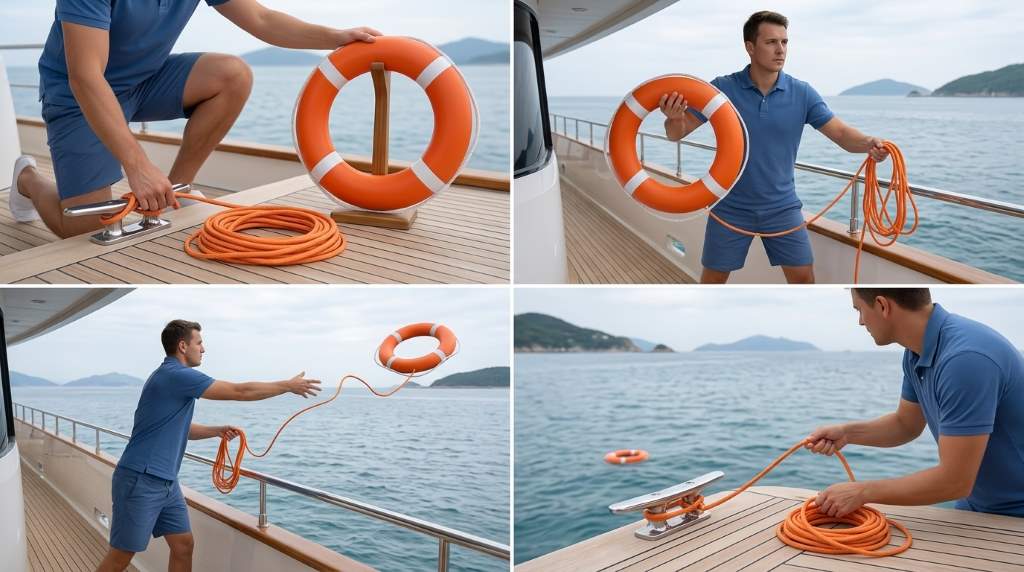
Step 1: Secure The Rope
Position the rope’s free end securely before you throw the ring. Some rescue setups allow you to pin the rope beneath your foot while maintaining stable footing.
Do not tie yourself to the rope or wrap it around your body. You need to remain capable of releasing or controlling the line if conditions change.
Step 2: Hold The Ring Correctly
Hold the life ring firmly with your dominant hand. Use your other hand to manage the rope without squeezing it into a tight bundle.
Keep the line organized enough to run smoothly as the ring travels. A tangled line can shorten the effective throwing distance and delay the rescue.
Step 3: Communicate Before Throwing
Get the person’s attention before releasing the ring whenever circumstances allow. Shout clearly that you will throw a flotation device toward them.
Tell them to grab the ring rather than swim toward you. Clear instructions can reduce confusion, especially when waves, wind, distance, or panic affect communication.
Step 4: Aim Beyond The Person
Do not aim directly at the person’s body. Instead, aim slightly beyond them so the ring lands within their reach without striking them.
This target becomes especially important when the person appears exhausted or disoriented. A heavy ring can cause injury if you throw it directly toward their head or upper body.
Step 5: Make An Underhand Throw
Swing the ring forward with a smooth underhand motion. Release it with enough momentum to reach the target while preserving your balance.
Allow the rope to pay out naturally as the ring travels. Avoid jerking the line because sudden tension can pull the ring away from the person.
Where Should You Aim The Life Ring?
Your target should usually sit just beyond the person, not directly over them. This placement gives you room to pull the ring back toward them if necessary.
Wind and moving water can change the ring’s trajectory significantly. Therefore, adjust your aim according to current conditions rather than repeating the same throw mechanically.
| Condition | Better Target | Important Adjustment |
|---|---|---|
| Calm water | Slightly beyond the person | Use a controlled underhand throw |
| Strong wind | Upwind of the person | Allow for wind drift |
| Moving water | Upstream when appropriate | Account for current movement |
| Panicked swimmer | Within easy arm’s reach | Give short, clear instructions |
| Limited visibility | Near the person’s visible position | Keep watching their location |
How To Pull Someone In Safely
Once the person secures the life ring, resist the urge to yank the rope. Instead, pull gradually using controlled hand-over-hand movements when the situation allows.
Keep watching the person’s position throughout the recovery. If they lose their grip, retrieve the ring and make another controlled throw rather than entering dangerous water.
Remember that the life ring supports flotation, but it does not eliminate every rescue hazard. Strong currents, waves, cold water, steep banks, and unstable surfaces can endanger both people.
What To Do If Your First Throw Misses
A missed throw does not mean you should immediately enter the water. Maintain your position, retrieve the ring, and prepare another throw if the rope remains accessible.
Try to improve the angle rather than simply throwing harder. Usually, better positioning, cleaner rope management, and a more deliberate target produce better results.
Common Reasons For A Miss
- The rope contained knots or crossed loops.
- The thrower aimed directly at the person’s body.
- Wind pushed the ring away from the target.
- The thrower stood too close to an unstable edge.
- The throw lacked enough controlled forward momentum.
- The person moved before the ring reached them.
Rope Management Makes The Difference
Many people focus on throwing distance while overlooking rope deployment. In practice, poor rope preparation can undermine an otherwise accurate throw.
Keep the line loosely organized rather than tightly wound. A rescue line should deploy quickly without snagging on railings, equipment, feet, or surrounding objects.
After every use, inspect the rope for abrasion, fraying, contamination, damaged hardware, or weakened attachment points. Replace compromised components before another emergency occurs.
Common Mistakes To Avoid
Do Not Jump Into The Water
Do not enter the water simply because someone else is drowning. An untrained rescuer can quickly become another person requiring rescue.
Instead, use available flotation equipment from a safe position. Professional water rescuers have specialized training and equipment for situations requiring direct entry.
Do Not Wrap The Rope Around Yourself
Never wrap the rope around your wrist, arm, waist, or another part of your body. Sudden rope tension can compromise your balance or pull you toward the water.
Do Not Throw Directly At The Head
A life ring should assist the person rather than become another source of injury. Aim close enough for easy access while avoiding direct contact with their head.
Do Not Pull Aggressively
Hard pulling can destabilize a struggling person or cause them to lose their grip. Use steady, controlled movement whenever the person’s condition and surroundings permit.
Life Ring Throwing In Different Water Environments
A pool rescue differs from a river, lake, marina, or coastal rescue. Water movement, surrounding structures, wind, and access points all influence the safest technique.
Swimming Pools
Pool rescues usually provide predictable water movement and nearby deck access. Still, keep swimmers away from the rescue area and avoid striking the person with the ring.
Rivers And Streams
Moving water requires greater attention to current direction. The person may travel downstream while you prepare the throw, so anticipate movement rather than targeting their original position.
Lakes And Ponds
Open water can create challenging distances and changing wind conditions. Choose a stable throwing position and account for surface movement before releasing the ring.
Boats And Docks
Boat decks and docks can create trip hazards during an emergency. Secure your footing first, clear unnecessary equipment, and keep the rope away from propellers or machinery.
How To Practice Before An Emergency
Practice improves accuracy because throwing a life ring involves coordination under pressure. A controlled training session can reveal whether your rope tangles or your throwing position feels unstable.
Use a safe, supervised environment with a suitable training target. Practice several throws from different distances without creating an actual rescue scenario.
- Practice securing the rope before every throw.
- Practice underhand releases from stable footing.
- Practice aiming slightly beyond a floating target.
- Practice retrieving the ring after a miss.
- Practice giving short verbal instructions.
- Practice inspecting and repacking the rescue line.
How To Maintain A Life Preserver Ring Setup
A rescue device only helps when people can deploy it immediately. Store the ring where people can see and reach it without unnecessary obstacles.
Inspect the ring, rope, attachment hardware, storage bracket, and surrounding area regularly. Replace damaged equipment instead of assuming minor deterioration will remain harmless.
Keep the rope deployment path clear at all times. A cabinet, railing, furniture item, or stored object can create a dangerous snag during an emergency.
Why Rescue Communication Matters
Communication becomes especially important when the person in the water feels frightened or exhausted. Calm, direct instructions can help them focus on the flotation device.
Tell them to grab the ring and hold it securely. Continue communicating while monitoring their location and waiting for professional responders.
Meanwhile, another person should provide emergency responders with the exact location whenever possible. Mention nearby landmarks, dock numbers, pool areas, or other identifying features.
A Simple Life Ring Throw Checklist
- Call: Contact emergency services immediately.
- Position: Stand securely away from the water’s edge.
- Prepare: Check the ring and remove rope tangles.
- Secure: Control the rope without wrapping it around yourself.
- Communicate: Tell the person what you will throw.
- Aim: Target slightly beyond the person.
- Throw: Use a smooth underhand motion.
- Recover: Pull slowly after they secure the ring.
- Monitor: Keep watching until professional help arrives.
Frequently Asked Questions
What Is The Best Way To Throw A Life Preserver Ring?
Use a controlled underhand throw and aim slightly beyond the person so they can easily grab the ring.
Should You Throw The Ring Directly At Someone?
No, aim close to them without striking their body, especially their head or face.
Should You Hold The Rope While Throwing?
Yes, maintain control of the rope while allowing it to pay out freely during the throw.
How Do You Pull Someone With A Life Ring?
After they secure the ring, pull steadily and carefully while maintaining your own stable position.
Should You Jump Into The Water To Help?
No, stay out of the water unless you have appropriate training and the situation specifically requires a trained rescue.
Final Thoughts
Throwing a life preserver ring effectively depends on preparation, accuracy, communication, and personal safety. The most important technique uses stable footing, controlled rope handling, and an underhand throw toward a point slightly beyond the person.
Practice the technique before an emergency so the movement feels familiar under pressure. Keep your rescue equipment accessible, inspect it regularly, and always prioritize calling professional responders.
If you maintain a pool, dock, marina, boat, waterfront facility, or other water-access area, review your rescue setup today. A few minutes of preparation can make your life ring much more useful when every second matters.