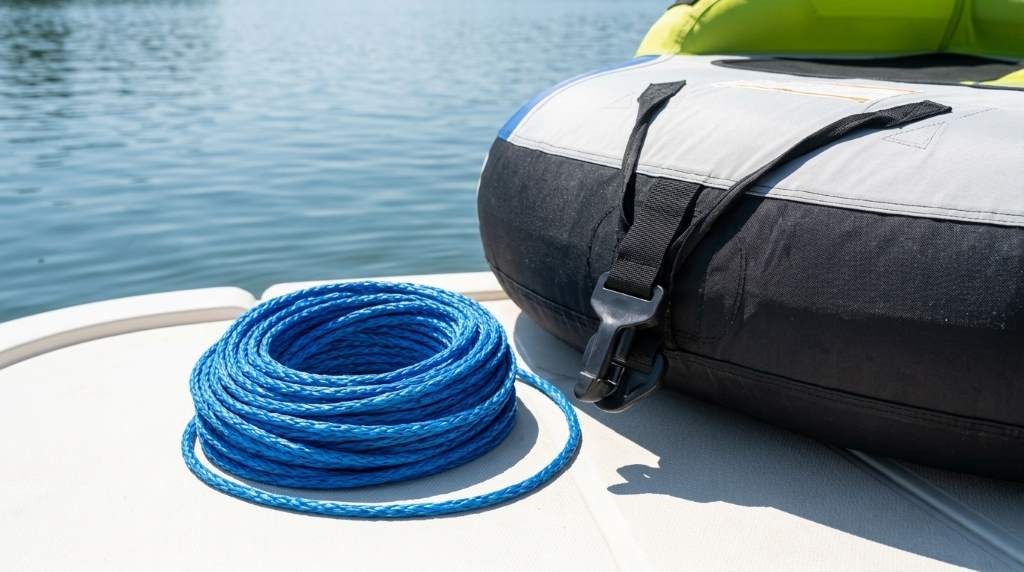
How To Attach A Rope For Tubing: Safe, Secure Setup Guide
Attaching a tubing rope correctly starts with the right tow point, rope, and connection method. For most setups, connect a dedicated tow rope to the tube’s tow point, then secure it to an approved boat attachment point. A quality Rope for tubing also needs enough strength for your rider load. Standard tubing ropes commonly measure about 60 feet, while recommended strength varies by rider capacity. Proper attachment prevents unnecessary strain and helps the tube track predictably behind the boat.
Getting this connection right takes only a few minutes, but small mistakes can create serious problems. Therefore, inspect every connection before the boat moves, and always follow your tube and boat manufacturers’ instructions.
Key Takeaways
- Use a tow rope specifically designed for inflatable tubes and the intended rider capacity.
- Attach the rope only to an approved, reinforced tow point on the boat.
- Use the tube’s designated tow strap, tow point, or quick-connect system.
- Use a tow harness when your boat lacks a suitable centered stern tow point.
- Never attach a tubing rope to a cleat, handrail, bimini frame, engine, or wake tower.
- Inspect the rope, attachment points, tube, and connections before every ride.
Start With the Correct Tubing Rope
Before attaching anything, confirm that your rope matches the tube and rider capacity. Tubing creates substantial drag because an inflatable tube contacts much more water than a skier.
For that reason, avoid substituting ordinary utility rope, wakeboard rope, or unsuitable water-ski lines. Dedicated tube ropes provide the appropriate construction, length, strength, and stretch characteristics for towable inflatables.
Check the Rope’s Rider Rating
Manufacturers commonly rate tubing ropes according to the number of riders and combined rider weight. As rider capacity increases, the rope needs greater tensile strength to handle higher towing loads.
For example, industry guidance commonly lists approximately 2,375 pounds for two riders and 6,100 pounds for five or six riders. However, always treat those figures as guidance and verify the specifications for your specific tube.
Also inspect the rope before connecting it. Replace any line showing serious fraying, cuts, chemical damage, melted fibers, severe discoloration, or other structural deterioration.
Identify the Correct Boat Tow Point
The boat attachment point matters just as much as the rope itself. Look for a manufacturer-approved tow eye, ski eye, transom tow point, or suitable tow pylon designed for pulling watercraft.
Usually, the strongest option sits low and near the center of the stern. This position keeps the pulling force aligned with the boat and helps the tube follow behind it.
Do Not Use Convenient Hardware
A nearby cleat might look strong, but appearance does not establish its towing capacity. Likewise, handrails, seats, grab handles, bimini frames, and engine components may not withstand tubing loads.
Therefore, never improvise an attachment point simply because it looks convenient. When the boat lacks a suitable tow point, use a properly rated tow harness or consult the boat manufacturer.
How To Attach the Rope to a Towable Tube
Most modern towable tubes provide a reinforced tow strap, webbing loop, or dedicated connection system. The exact attachment method depends on the tube’s design, so inspect the tow point before connecting the rope.
Never attach the rope to ordinary handles unless the manufacturer specifically identifies those handles as towing points. Passenger handles and towing attachments serve different structural purposes.
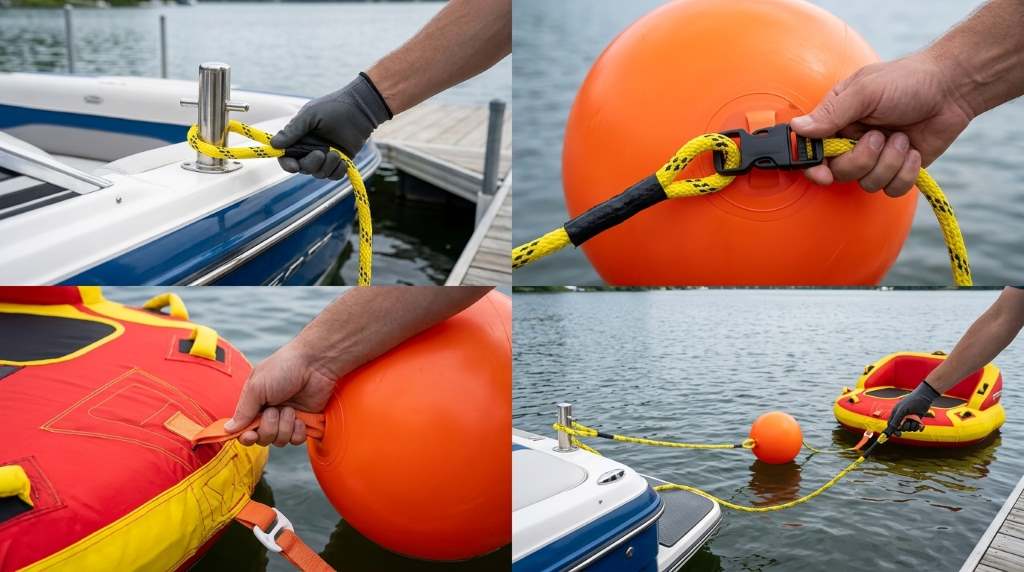
Method 1: Use a Quick-Connect System
A quick-connect device provides one of the simplest ways to attach a tubing rope. It stays connected to the tube’s reinforced tow point and allows faster rope changes.
- Locate the reinforced tow strap or designated tow loop on the tube.
- Pass the quick-connect loop through the tube’s tow attachment loop.
- Pass the connector through its own rope loop.
- Pull the connector tight against the tow attachment.
- Attach the tow rope’s loop to the quick-connect device.
- Pull the rope firmly to confirm that the connection seats correctly.
This setup avoids unnecessary knots and makes switching towables much easier. However, the connector must match the rope and tube system and remain fully seated before towing.
Method 2: Attach a Rope Loop Directly
Some tubes accept the tow rope directly through a reinforced tow point. In that case, use the rope’s factory-spliced loop instead of creating an improvised knot.
- Find the looped end of the dedicated tow rope.
- Pass the loop through the tube’s designated tow point.
- Bring the loop around the tow attachment according to its design.
- Pull the rope through the loop to create a secure girth-style connection.
- Seat the connection firmly against the reinforced attachment.
Do not force a rope through an opening that appears too small. Instead, use the connector recommended for that particular tube.
How To Attach the Rope to the Boat
Once the tube connection looks secure, connect the opposite rope end to the boat. Again, use only the approved tow point identified by the boat manufacturer.
Central Tow Eye or Ski Eye
A central stern tow eye provides a straightforward connection for many boats. Most dedicated tubing ropes include a factory loop that can connect directly to an appropriate tow eye.
- Place the boat in a safe stationary position.
- Locate the approved central tow eye.
- Pass the rope loop through the tow eye when the fitting permits it.
- Complete the manufacturer’s recommended loop connection.
- Pull the rope firmly to seat the connection.
Many modern tow ropes use loop connections rather than permanent knots. Therefore, follow the rope manufacturer’s intended attachment method instead of adding unnecessary knots.
Boat Without a Center Tow Point
Some outboard boats and pontoons lack a suitable central tow point. In those situations, a properly rated tow harness can distribute pulling forces between two approved stern attachment points.
The harness creates a centered connection behind the boat. Then, the main tubing rope connects to the harness’s central attachment or pulley system.
This arrangement can reduce side loading and help maintain a more centered pull. However, every harness component must match the boat, tube, rope, and expected load.
How To Attach a Rope to a Pontoon Boat
Pontoon boats often require special attention because their stern configuration differs from traditional ski boats. First, identify the manufacturer’s approved towing eyes or reinforced attachment points.
When no suitable center point exists, use a correctly rated pontoon tow harness. Attach each harness end only to approved hardware, then connect the tow rope to the centered harness connection.
Never attach a tubing rope to ordinary deck cleats or railing supports. Those components may lack the reinforcement needed for repeated towing loads.
How To Attach a Rope to a Jet Ski
Personal watercraft require a setup designed specifically for towing. First, verify that the watercraft manufacturer permits tubing and identifies an appropriate tow point.
Then, use a compatible tube rope and connection system designed for personal watercraft towing. Keep the rope clear of the pump, intake, steering components, and other moving parts.
Because personal watercraft behave differently from boats, follow the tube and watercraft manufacturer’s towing restrictions carefully. Also use a towable specifically approved for personal watercraft use when required.
What Rope Length Should You Use?
Many tubing ropes measure about 60 feet, which provides a practical distance behind the boat. The correct length depends on the tube, boat, water conditions, and manufacturer recommendations.
A suitable distance helps keep riders away from excessive stern spray. It also gives the tube enough space to move without creating unnecessary proximity to the boat.
However, longer does not automatically mean safer or better. Always prioritize the length specified for your particular towable and riding setup.
Should You Use a Tow Harness or Bridle?
A tow harness can help when the boat lacks a suitable central attachment point. It connects to two approved stern points and creates a central towing position.
This design distributes the load more evenly than attaching the rope to one unsuitable side point. It can also help maintain a centered pull during normal towing.
Some harness systems include a pulley or central connector. Follow the harness manufacturer’s instructions carefully, especially when connecting snap hooks or quick-connect devices.
Why a Booster Ball Can Help
A booster ball can keep part of the tow system above the water behind a low tow point. This design can reduce rope drag and improve visibility.
It can also help prevent the rope from settling too deeply into the water during lighter towing conditions. However, a booster ball does not replace a properly rated rope or approved attachment point.
Install it according to its manufacturer’s instructions. Also inspect its connection points before each use.
Common Rope Attachment Mistakes to Avoid
Most tubing connection problems begin with shortcuts rather than complicated technical failures. Fortunately, you can prevent many problems through a simple pre-ride inspection.
- Using the wrong rope: Regular rope may lack the required strength and construction for towing.
- Choosing a weak attachment: Never substitute a cleat, rail, or random fitting for an approved tow point.
- Using damaged rope: Frayed or sun-damaged fibers can fail under load.
- Ignoring rider capacity: A rope rated for fewer riders may not handle a larger tube load.
- Creating unnecessary knots: Factory loop systems usually provide a safer and simpler connection.
- Leaving the rope near the propeller: Keep the entire line clear before starting the engine.
- Skipping the final check: A connection that looks secure still deserves a firm manual inspection.
A Simple Pre-Ride Rope Inspection
Before every ride, inspect the entire towing system from the boat to the tube. Start at the boat and work toward the towable without skipping any connection.
Check for damaged fibers, loose hardware, distorted attachment points, worn webbing, and improperly seated connectors. Also confirm that the rope remains completely free from knots and tangles.
Use This Five-Point Check
- Confirm the rope matches the tube’s rider rating.
- Inspect the complete rope for damage or excessive wear.
- Verify the boat connection uses approved towing hardware.
- Confirm the tube connection uses its designated tow point.
- Make sure the rope remains clear of the propeller and other hazards.
After connecting everything, have another person visually inspect the setup when possible. A second perspective can reveal crossed straps, incomplete connectors, or unexpected rope positioning.
How To Start Towing After Connecting the Rope
Do not accelerate immediately after attaching the rope. First, make sure the rider understands the communication signals and knows what happens after falling.
Start slowly and allow the rope to become tensioned gradually. Then increase speed only within the limits recommended for the tube, rider, boat, and conditions.
Avoid aggressive turns, especially with inexperienced riders. Sharp steering changes can send the tube sideways and dramatically increase forces on the rope and attachment system.
What To Do If the Rope Gets Wet or Drags
Some rope contact with water is normal, especially with low tow points. Excessive drag, however, can affect handling and increase resistance.
A suitable booster ball or compatible harness system may help keep the rope elevated. Before adding accessories, confirm that the equipment matches your specific tubing setup.
Never solve rope drag by attaching the line to a higher but unsuitable structure. An elevated wakeboard tower may not have the correct towing strength or geometry for inflatable tubes.
How to Store a Tubing Rope After Use
Proper storage extends rope life and helps preserve its strength. After each session, rinse the rope with fresh water when appropriate, especially after saltwater use.
Allow the rope to dry completely before storing it. Then keep it away from prolonged direct sunlight, excessive heat, chemicals, and sharp objects.
Coil the rope loosely rather than crushing it under heavy equipment. Before its next use, inspect it again instead of assuming the previous inspection remains valid.
When You Should Replace the Rope
Replace the rope when you find serious fraying, cuts, melted sections, broken fibers, or other visible structural damage. Also replace equipment when connectors or attachment loops show significant wear.
Sun exposure gradually affects synthetic fibers, even when damage remains difficult to notice. Therefore, frequent users should inspect ropes more closely and replace questionable equipment rather than taking chances.
If you cannot confidently determine whether a damaged rope remains safe, retire it. The cost of replacement is small compared with the consequences of a towing failure.
Quick Comparison of Common Attachment Methods
| Attachment Method | Best Use | Key Advantage | Main Consideration |
|---|---|---|---|
| Quick-connect | Compatible towables | Fast attachment and removal | Must match the tube system |
| Direct loop connection | Approved tow eyes | Simple and compact | Follow the rope’s intended method |
| Tow harness | Boats without center points | Centers the pulling force | Requires compatible stern attachment points |
| Booster ball system | Low tow points | Helps keep rope above water | Does not replace proper towing hardware |
Frequently Asked Questions
Can I tie a tubing rope directly to any boat cleat?
No, use only an approved tow point designed to handle tubing loads.
What is the easiest way to attach a rope to a tube?
A compatible quick-connect system usually provides the fastest and simplest attachment method.
Can I use a wakeboard rope for tubing?
No, use a dedicated tubing rope rated for your tube’s rider capacity and towing requirements.
How long should a tubing rope be?
A 60-foot rope is common, but always follow the towable manufacturer’s recommended length.
Should I use a harness on a pontoon boat?
Yes, a properly rated tow harness can provide a centered connection when the pontoon lacks a suitable center tow point.
Final Thoughts
Learning how to attach a rope for tubing becomes straightforward once you match every component correctly. Use a dedicated tube rope, connect it to approved tow hardware, and secure the tube through its designated attachment system.
Most importantly, never compensate for missing equipment with an improvised connection. Before every ride, inspect the rope, connectors, tow points, tube attachment, and surrounding clearance.
Take a few extra minutes before launching, and make proper rope attachment part of every tubing routine. Choose equipment that matches your setup, follow manufacturer instructions, and replace anything that shows meaningful damage.