How To Use Battle Ropes for Full-Body Gym Workouts: A Complete Guide
Battle ropes are one of the most versatile and effective tools for full-body workouts. They engage multiple muscle groups simultaneously, providing a high-intensity cardio and strength training experience. Whether you’re a beginner or a seasoned athlete, battle ropes can help you build strength, endurance, and power.
I first discovered battle ropes during a group fitness class. At first, I was skeptical about how effective they could be, but after just one session, I was hooked. The ropes challenged my entire body in ways I hadn’t experienced with traditional weights or cardio machines. If you’re looking to spice up your gym routine, incorporating a battle rope workout can take your fitness to the next level.
Why Battle Ropes Are a Game-Changer for Full-Body Workouts
Battle ropes offer a unique combination of strength training and cardiovascular exercise. According to a study published in the Journal of Strength and Conditioning Research, battle rope exercises can burn up to 10-12 calories per minute, making them one of the most efficient workouts for fat loss and conditioning. Additionally, they engage core muscles, arms, shoulders, and legs, providing a comprehensive full-body workout.
One of the biggest advantages of battle ropes is their versatility. You can perform a wide range of exercises that target different muscle groups and fitness goals. Whether you want to build strength, improve endurance, or enhance explosive power, battle ropes can be adapted to meet your needs.
Furthermore, battle ropes are low-impact, making them suitable for people of all fitness levels. They allow you to control the intensity of your workout, whether you’re recovering from an injury or pushing for a new personal best.
Types of Battle Ropes
Polyester Battle Ropes
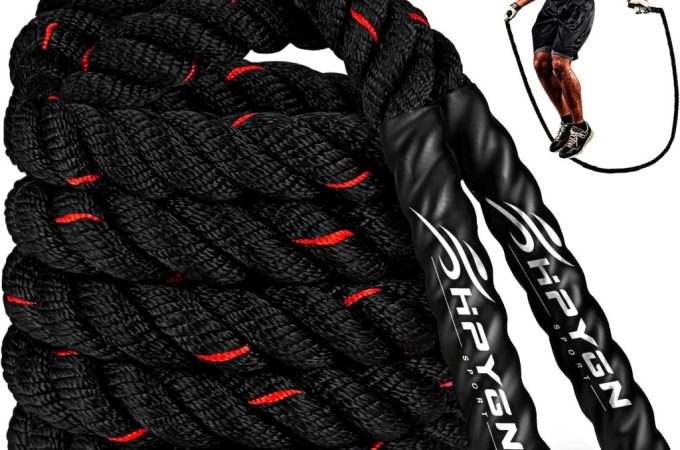
Polyester battle ropes are a popular choice due to their durability and resistance to wear and tear. They are less prone to fraying and can withstand heavy use, making them ideal for commercial gyms or frequent home workouts. Polyester ropes also maintain their shape and flexibility over time, ensuring consistent performance.
However, polyester ropes can be slightly heavier than other materials, which may affect the speed and fluidity of your movements. They are best suited for strength-focused exercises where durability is a priority.
Nylon Battle Ropes
Nylon battle ropes are known for their smooth texture and flexibility, making them easier to grip and maneuver. They are lighter than polyester ropes, allowing for faster and more fluid movements. This makes them a great choice for cardio-focused workouts and high-intensity interval training (HIIT).
Nylon ropes are also resistant to moisture and UV damage, making them suitable for outdoor use. However, they may be more prone to fraying over time, especially with heavy use. Regular inspection and maintenance can help extend their lifespan.
Polypropylene Battle Ropes
Polypropylene battle ropes are the most affordable option and are often used for entry-level or casual workouts. They are lightweight and float on water, making them a good choice for outdoor or aquatic exercises. However, they are less durable than polyester or nylon ropes and may not withstand heavy or prolonged use.
Polypropylene ropes are best suited for beginners or those looking for a budget-friendly option to try out battle rope exercises.
Essential Battle Rope Exercises for Full-Body Workouts
Alternating Waves
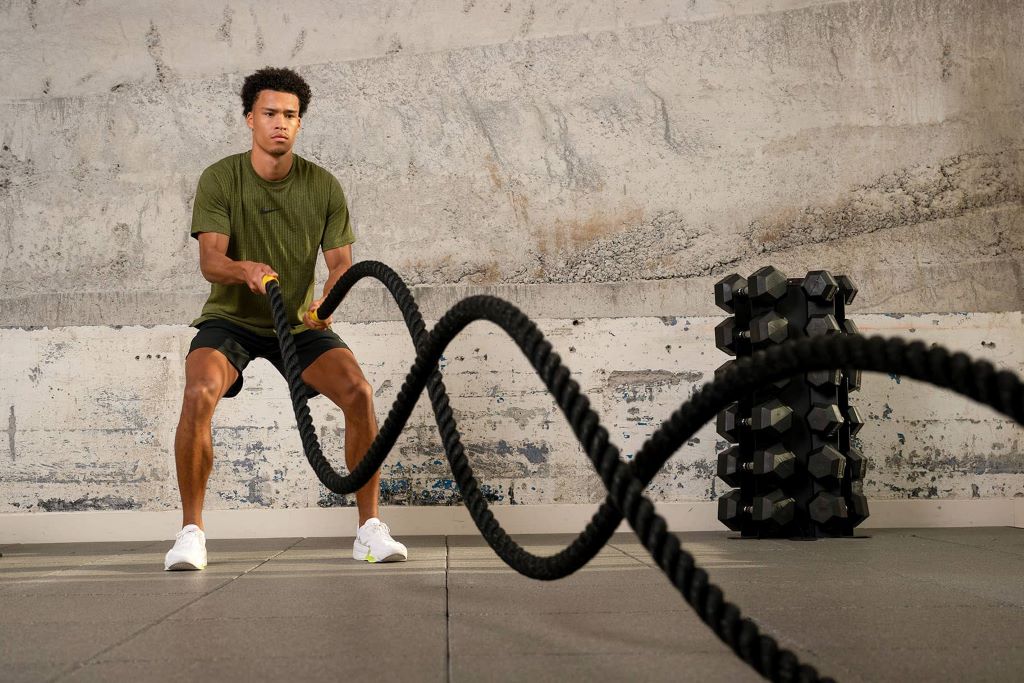
Alternating waves are one of the most basic and effective battle rope exercises. To perform this exercise, stand with your feet shoulder-width apart and hold one end of the rope in each hand. Alternate raising and lowering each arm to create a wave motion with the ropes.
This exercise engages your shoulders, arms, and core, providing a full-body workout. It also improves coordination and endurance. Start with 30-second intervals and gradually increase the duration as you build stamina.
Double Waves
Double waves are similar to alternating waves but involve raising and lowering both arms simultaneously. This exercise increases the intensity and focuses more on your shoulders and upper back. It also requires greater core engagement to maintain stability.
To perform double waves, stand with your feet shoulder-width apart and hold one end of the rope in each hand. Raise both arms together to create a wave motion, then lower them in sync. Aim for 30-second to 1-minute intervals, depending on your fitness level.
Slams
Slams are a high-intensity exercise that targets your core, shoulders, and arms. To perform this exercise, stand with your feet shoulder-width apart and hold the ends of the rope with both hands. Raise the rope overhead, then slam it down to the ground with force.
This explosive movement engages your entire upper body and core, providing a powerful cardio and strength workout. Start with 10-15 reps and gradually increase as you build strength and endurance.
Circles
Circles are a great exercise for targeting your shoulders and arms while improving coordination. To perform this exercise, stand with your feet shoulder-width apart and hold one end of the rope in each hand. Move your arms in a circular motion, creating a circular wave with the ropes.
You can perform circles in both directions (clockwise and counterclockwise) to engage different muscle groups. Aim for 30-second intervals in each direction.
Snakes
Snakes are an advanced battle rope exercise that targets your core, shoulders, and arms. To perform this exercise, stand with your feet shoulder-width apart and hold one end of the rope in each hand. Move your arms in a snake-like motion, creating a fluid, undulating wave with the ropes.
This exercise requires greater coordination and core strength. Start with 20-30 second intervals and gradually increase the duration as you improve.

Tips for Maximizing Your Battle Rope Workouts
Warm Up Properly
Before starting your battle rope workout, it’s important to warm up your muscles and joints. A proper warm-up increases blood flow, improves flexibility, and reduces the risk of injury. Spend 5-10 minutes performing dynamic stretches, such as arm circles, shoulder rolls, and torso twists.
Additionally, start with lighter, slower movements to get your body accustomed to the motion of the ropes. Gradually increase the intensity as your muscles warm up.
Focus on Form
Proper form is crucial for getting the most out of your battle rope workouts and preventing injury. Maintain a stable stance with your feet shoulder-width apart and your knees slightly bent. Engage your core and keep your back straight to protect your spine.
Additionally, focus on controlled, fluid movements rather than jerky or erratic motions. This will help you maintain balance and engage the correct muscle groups.
Vary Your Workouts
To keep your battle rope workouts challenging and effective, vary the exercises and intensity levels. Mix up the types of waves, slams, and circles you perform, and experiment with different intervals and rest periods.
Additionally, incorporate other exercises, such as squats, lunges, or burpees, to create a full-body circuit workout. This will help you target different muscle groups and prevent boredom.
Use the Right Rope Length and Thickness
The length and thickness of your battle rope can affect the intensity and effectiveness of your workout. Longer and thicker ropes provide more resistance, making your workout more challenging. Shorter and thinner ropes are lighter and easier to maneuver, making them a good choice for beginners or cardio-focused workouts.
For most people, a 30-50 foot rope with a diameter of 1.5-2 inches is a good starting point. Adjust the length and thickness based on your fitness level and goals.
Stay Hydrated
Battle rope workouts are intense and can quickly dehydrate you. Make sure to drink plenty of water before, during, and after your workout to stay hydrated. Dehydration can lead to fatigue, dizziness, and reduced performance.
Additionally, take breaks as needed to catch your breath and recover. Listen to your body and avoid pushing yourself too hard, especially when starting out.
My Personal Experience with Battle Ropes
When I first tried battle ropes, I was amazed at how quickly they elevated my heart rate and engaged my entire body. I started with basic alternating waves and gradually worked my way up to more advanced exercises like slams and snakes. The ropes challenged me in ways that traditional weights and cardio machines couldn’t.
One of the best decisions I made was incorporating battle ropes into my HIIT workouts. I would perform 30-second intervals of alternating waves, followed by 30 seconds of rest, and repeat for 10-15 rounds. This not only improved my cardiovascular endurance but also helped me build strength and power.
I also found that battle ropes were a great way to break up the monotony of my regular gym routine. They added variety and excitement to my workouts, keeping me motivated and engaged. Plus, the sense of accomplishment I felt after a tough battle rope session was unmatched.
FAQs
What are the benefits of using battle ropes?
Battle ropes offer a full-body workout that engages multiple muscle groups simultaneously. They provide a combination of strength training and cardiovascular exercise, helping you build strength, endurance, and power. Additionally, battle ropes are low-impact and versatile, making them suitable for people of all fitness levels.
How long should a battle rope workout be?
The length of your battle rope workout depends on your fitness level and goals. For beginners, start with 10-15 minutes of continuous exercise, broken up into 30-second intervals with 30 seconds of rest. As you build stamina, you can increase the duration and intensity of your workouts.
Can I use battle ropes at home?
Yes, battle ropes can be used at home, provided you have enough space and a secure anchor point. Make sure to choose a rope that is suitable for your fitness level and goals. Additionally, ensure the anchor point is sturdy and can withstand the force of your movements.
What muscles do battle ropes work?
Battle ropes engage multiple muscle groups, including your shoulders, arms, core, and legs. Exercises like alternating waves, double waves, and slams target your upper body and core, while movements like squats and lunges can incorporate your lower body.
How do I choose the right battle rope for me?
The right battle rope for you depends on your fitness level, goals, and budget. For most people, a 30-50 foot rope with a diameter of 1.5-2 inches is a good starting point. Polyester ropes are durable and suitable for strength-focused workouts, while nylon ropes are lighter and better for cardio-focused exercises. Polypropylene ropes are the most affordable but least durable option.
Conclusion
Battle ropes are a versatile and effective tool for full-body gym workouts. They provide a unique combination of strength training and cardiovascular exercise, helping you build strength, endurance, and power. By incorporating battle rope exercises into your routine, you can challenge your entire body in new and exciting ways.
Whether you’re a beginner or a seasoned athlete, battle ropes offer a low-impact, high-intensity workout that can be adapted to meet your fitness goals. Investing in a high-quality battle rope and learning how to use it effectively can take your fitness to the next level.
Have you tried battle ropes in your workouts? Share your experiences and tips in the comments below, and don’t forget to share this guide with fellow fitness enthusiasts who might find it helpful!